
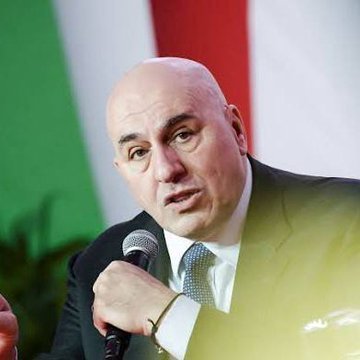
Italian Defense Minister Guido Crosetto delivered a haunting assessment of the Iran war’s trajectory on Monday, March 30, 2026, confessing that the intelligence he receives regarding the conflict’s next phase is “keeping him awake at night.” In an interview with La Repubblica, Crosetto warned that the coming week could bring consequences for Italy’s economy and daily life that the public is not yet prepared for.
The “Week Ahead” Warning
Crosetto’s comments reflect a sense of profound unease within the Italian cabinet as the U.S.-led “infrastructure war” enters its second month.
- The Intelligence Burden: “I am forced to know things about what could happen in the coming week, and the effects it will have on the economy and our daily lives, that no longer allow me to sleep,” Crosetto stated.
- Beyond the Battlefield: The Minister emphasized that his concern is not merely military, but systemic. He noted that the conflict has evolved from a “surgical” strike into a regional “chaos” that is now threatening the “life-support systems” of the global economy.
- The Domestic Impact: Crosetto’s warning follows reports of a 20% drop in domestic consumption and fuel prices reaching €1.71 per liter for petrol, despite government efforts to subsidize costs.
Italy’s Strategic Dilemma: Alliance vs. Sovereignty
While reaffirming Italy’s alliance with the United States as a “guarantee of freedom,” Crosetto took a notably pragmatic tone regarding Italy’s exposure.
- “Not Our War”: Reaffirming the line set by Prime Minister Giorgia Meloni, Crosetto reiterated that Italy is not a belligerent. However, he admitted that Italy is the “earthenware vessel of the world,” lacking the independent deterrence to avoid the shockwaves of Washington’s decisions.
- The Spanish Comparison: Crosetto addressed the internal political pressure from the AfD and other European populists who have praised Spain for closing its bases. He argued that Italy’s treaties are identical to Spain’s, but noted that Italy is choosing to provide “defensive assistance”—such as anti-drone systems to Gulf partners—rather than opting for total isolation.
- The $200 Oil Risk: The Minister warned that if a solution is not reached via the “Islamabad Track” shortly, the alternative is a prolonged closure of the Strait of Hormuz and oil prices potentially hitting $200 a barrel.
Political Stability and the Referendum
The psychological toll of the war is also impacting Italy’s domestic political calendar.
- Shelving the Referendum: Crosetto called for “shelving” the results of the recent justice reform referendum, arguing that the country must focus entirely on the international crisis.
- No Early Elections: He ruled out the possibility of early elections, stating that a sense of responsibility requires the current government to hold firm. “Hold on to Meloni,” he urged, citing the Prime Minister’s “sense of the state” during the crisis.
| Crosetto’s Key Concerns | Impact on Italy (Mar 30, 2026) |
| Energy Prices | Self-service petrol at €1.713/L; diesel at €1.966/L. |
| Hormuz Blockade | Threat of $200/barrel oil; transport costs up 40%. |
| Security Risk | Increased alert for “sleeper cells” and terrorism. |
| Alliance Strain | Managing U.S. base requests vs. national sovereignty. |
The “China Converging” Hope
Despite his lack of sleep, Crosetto offered one potential silver lining: the role of Beijing. He argued that China has “converging interests” with Europe in resolving the Hormuz crisis, as it is the largest importer of Gulf energy. He suggested that a UN-led “international convoy” involving major powers like China could be the only way to reopen the Strait without triggering a wider conflagration
