
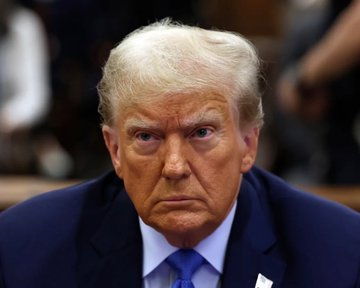
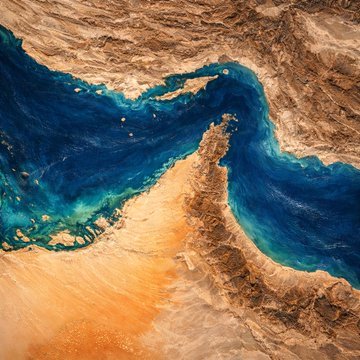
In a major pivot that has sent shockwaves through global energy markets, President Donald Trump has privately informed senior aides and national security officials that he is willing to conclude military operations against Iran even if the Strait of Hormuz remains largely closed to international shipping. The report, published by the Wall Street Journal (WSJ) on Tuesday, March 31, 2026, suggests the administration is prioritizing an exit from the “kinetic phase” of the war over the immediate restoration of global oil flows.
A “Strategic Decoupling” of Objectives
The President’s reported stance marks a significant departure from the “15-point” peace proposal, which had previously listed the “unconditional reopening” of the Strait as a non-negotiable demand.
- Prioritizing the “Nuclear & Missile” Finish: Trump reportedly told aides that if the U.S. can secure a “signed and verified” deal to dismantle Iran’s nuclear enrichment and long-range missile factories, he would consider the mission a success.
- The “Cleanup” Can Wait: According to the WSJ, the President expressed a preference for leaving the “complex and dangerous” mine-clearing and reopening operations to a later date—or to a multinational coalition—rather than extending the current bombing campaign or committing to a ground invasion.
- “Total Victory” Redefined: “We’ve hit 11,000 targets. We’ve decimated their industry. If they want to keep their gate closed and starve themselves, that’s their problem,” Trump reportedly remarked during a closed-door briefing at the Mar-a-Lago command center.
The Economic Gamble: $120 Oil and the “Energy Shield”
The prospect of an “end to the war” that leaves the world’s most vital energy chokepoint blocked has triggered immediate volatility.
- Market Panic: Brent crude futures spiked toward $120 per barrel following the WSJ report, as traders realized that a ceasefire might not provide the immediate supply relief the global economy desperately needs.
- Domestic Production: Trump’s aides argue that the U.S. is “better positioned than ever” to withstand a closed Strait due to record-high domestic fracking and the newly implemented “Energy Shield” protocols with Canada and Mexico.
- The “Toll” Reality: If the war ends with the Strait closed, it effectively leaves Iran’s newly approved “transit fee” legislation in place, potentially allowing Tehran to maintain a permanent financial stranglehold on Gulf exports.
Internal Pushback: The “Rubio-Netanyahu” Axis
The WSJ report notes that this shift has caused “significant friction” within the coalition and the cabinet.
- Marco Rubio’s Warning: The Secretary of State has reportedly argued that leaving the Strait closed would be a “strategic surrender” to Iranian “maritime terrorism” and would embolden China to pursue similar tactics in the South China Sea.
- The Israeli Factor: Prime Minister Benjamin Netanyahu, who recently stated he would not set a “timeline” for the war, is said to be “deeply concerned” by the prospect of a premature U.S. exit that leaves Iran’s regional leverage—specifically its control over the “gate of the world”—intact.
- Gulf Ally Response: The report follows a Washington Post scoop that Saudi Arabia and the UAE are privately urging Trump to “finish the mission.” A closed Strait would leave these allies economically isolated and dependent on land-based pipelines that are still under construction.
| Strategic Priority | Previous Stance (Mar 1, 2026) | New Reported Stance (Mar 31, 2026) |
| Strait of Hormuz | Must be “Open for Business” | Can remain closed/deferred |
| Nuclear Program | Total Dismantling | Total Dismantling (Non-negotiable) |
| Regime Change | “Maybe, Maybe Not” | “More Reasonable” elements accepted |
| Military Presence | “Stay as long as it takes” | Seek exit by April 6 |
The “Islamabad Track” Leverage
Diplomatic sources in Pakistan suggest that this “willingness to walk away” may be a tactical bluff intended to force the Iranian “more reasonable” group—including Speaker Ghalibaf—to sign a nuclear deal immediately. By signaling he is comfortable with a closed Strait, Trump is telling Tehran that the U.S. does not need their oil, but they need the bombing to stop.
