
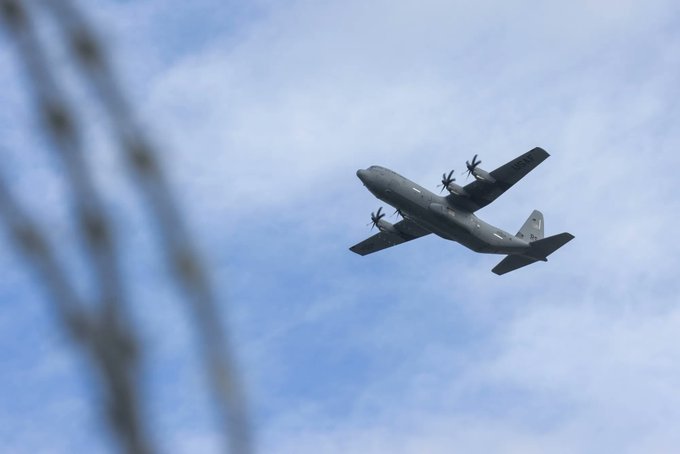
In a significant diplomatic rift, the Italian government has formally denied the United States military permission to use the Sigonella Air Base in Sicily for operations bound for the Middle East. The decision, confirmed on Tuesday, March 31, 2026, underscores growing European friction over the current U.S.-led military offensive against Iran and the limits of existing defense treaties.
The Incident: Bombers in the Air
According to the original report by Corriere della Sera, the friction was triggered when a U.S. flight plan involving several heavy bombers was submitted to Italian authorities while the aircraft were already in flight.
- Lack of Authorization: The Italian Air Force General Staff informed Chief of Defence Staff Luciano Portolano that no formal authorization had been requested through the appropriate military or governmental channels.
- The Refusal: Upon being briefed, Defense Minister Guido Crosetto issued a direct order to deny the landing. Portolano subsequently informed the U.S. command that the aircraft were barred from touching down at Sigonella.
- Procedural Breach: Italian officials noted that the “surprise” nature of the flight plan—communicated only after takeoff—was a breach of standard sovereignty protocols.
Legal and Treaty Constraints
A key factor in Rome’s decision was the classification of the mission. Under long-standing bilateral agreements (dating back to 1954), the U.S. has broad latitude for “logistical” or “routine” missions. However:
- Non-Logistical Status: Initial checks by the Italian military determined these were combat-oriented sorties, which do not fall under the automatic protections of the treaty.
- Parliamentary Oversight: Prime Minister Giorgia Meloni recently clarified that any use of Italian bases for “kinetic” or combat operations would require formal evaluation and parliamentary oversight, as Italy is not currently at war and seeks to avoid regional escalation.
- Constitutional Neutrality: Minister Crosetto and PM Meloni have both cited Article 11 of the Italian Constitution, which stipulates that Italy “rejects war as an instrument of aggression,” as a guiding principle for these restrictions.
Strategic Impact on “Operation Epic Fury”
The denial of Sigonella—often called the “Hub of the Mediterranean”—is a logistical blow to U.S. operations in the Middle East.
- Increased Transit: Losing Sigonella as a stopover for bombers forces the U.S. to rely on longer, more complex aerial refueling tracks or alternative bases in nations with fewer restrictions.
- The “Spain” Precedent: Italy’s move follows a similar airspace ban imposed by Spain last week. The White House has publicly downplayed these bans, asserting it has “sufficient regional alternatives,” but the trend suggests a hardening European stance against direct involvement in the Iran conflict.
| Key Detail | Status (March 31, 2026) |
| Location | Naval Air Station Sigonella, Sicily |
| Aircraft Involved | U.S. Strategic Bombers |
| Decision Maker | Defense Minister Guido Crosetto |
| Reason for Denial | Lack of authorization; Non-routine combat mission |
| Treaty Status | Outside the scope of the 1954 Bilateral Agreement |
Historical Echoes: The “Crisis of Sigonella”
Analysts have noted the historical irony of this standoff. In 1985, the “Crisis of Sigonella” saw a famous armed confrontation between Italian Carabinieri and U.S. Delta Force over the custody of the Achille Lauro hijackers. While the 2026 incident is purely diplomatic, it represents the most significant assertion of Italian sovereignty over the base in over four decades.
