
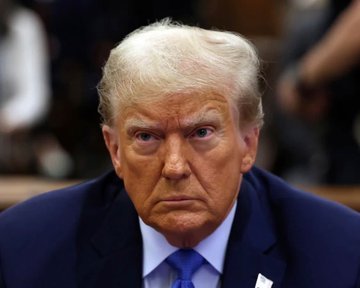
In a move that has sent shockwaves through the “Special Relationship,” President Donald Trump issued a scathing directive to the United Kingdom on Tuesday, March 31, 2026. During an address from the Oval Office, the President told British leadership to “build up some delayed courage” and take responsibility for securing the Strait of Hormuz themselves, declaring that the era of American-led maritime policing in the Gulf is coming to an end.
The “America First” Maritime Pivot
The President’s comments represent the most aggressive public shift in U.S. naval policy in decades. Trump signaled that once his immediate military objectives against Iran’s domestic infrastructure are met, the burden of maintaining global energy flow will shift to those most dependent on it.
- The Direct Quote: “The United Kingdom, and frankly the rest of Europe, have been riding on our coattails for far too long,” Trump stated. “It’s time they build up some delayed courage and take the Strait themselves. The U.S. won’t be there to help you anymore.”
- End of the “Shield”: The President emphasized that the U.S. is now energy-independent and that the American taxpayer will no longer foot the multibillion-dollar bill for protecting shipping lanes that primarily serve Asian and European markets.
- The “Broker” Accusation: Trump’s rhetoric follows reports that the U.S. is willing to wind down the war even if the Strait remains partially closed, essentially leaving the “chokepoint” problem in the hands of regional and European powers.
A Growing Rift with London
The timing of the statement is particularly jarring, as it coincides with Syrian President Ahmed al-Sharaa’s historic visit to London to meet with Prime Minister Keir Starmer.
- Starmer’s Dilemma: The UK is currently grappling with severe economic pressure due to the Hormuz closure, with fuel prices at record highs. However, the Royal Navy—currently stretched thin across multiple theaters—is widely seen as lacking the carrier strike volume to “take” and hold the Strait without U.S. carrier air cover.
- Italy and Spain: Trump’s frustration may be fueled by recent European “sovereignty” plays, such as Italy’s refusal earlier today to allow U.S. bombers to land at Sigonella Air Base.
- The “Islamabad Track”: Analysts suggest Trump is using this rhetoric as a “forcing function” to push the UK and EU into applying more pressure on Tehran to sign the 15-point peace deal currently being negotiated in Pakistan.
Strategic Consequences of a U.S. Withdrawal
If the U.S. follows through on withdrawing its “maritime shield,” the global order faces several immediate risks:
- The Power Vacuum: Without the U.S. 5th Fleet patrolling the Strait, Iran’s “toll system” or total blockade could become a permanent fixture, unless a new international coalition is formed.
- Economic Shock: Energy markets reacted instantly to the news, with Brent crude spiking toward $128 per barrel as traders priced in a long-term, unprotected blockade of the world’s most vital energy artery.
- Insurance Hikes: Maritime insurance for ships transiting the region is expected to become prohibitively expensive, effectively ending “freedom of navigation” for all but the most heavily armed convoys.
| Policy Shift | Status (March 31, 2026) |
| U.S. Stance | Selective Engagement; Strategic Withdrawal |
| Target Audience | United Kingdom & European Union |
| The Requirement | Independent European Naval Action in Hormuz |
| Market Reaction | Oil Price Volatility; Insurance Spikes |
| U.S. Condition | War ends when Iran’s capacity is destroyed, not when trade resumes |
The “April 6” Clock is Ticking
With only six days remaining until the President’s self-imposed deadline for a regional deal, the “courage” ultimatum is being viewed as a high-stakes gamble. By threatening to leave the UK and Europe to handle the Iranian Navy alone, Trump is effectively daring his allies to either support his “Operation Epic Fury” more aggressively or face the economic consequences of a permanently shut Strait of Hormuz.
