
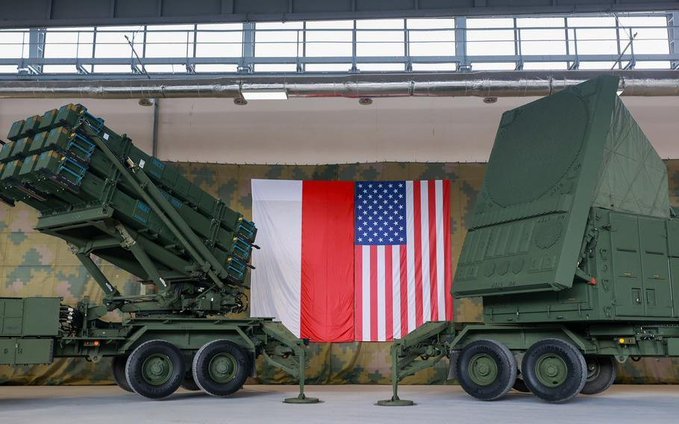
In a firm assertion of national sovereignty, Poland officially declined a United States request to redeploy one of its Patriot air defense batteries to the Middle East on Tuesday, March 31, 2026. The refusal marks a rare public disagreement between Warsaw and Washington, as Poland prioritizes the security of NATO’s eastern flank amidst the ongoing global instability.
The Defense Minister’s Mandate
Polish Defense Minister Władysław Kosiniak-Kamysz addressed the informal U.S. request via a statement on X (formerly Twitter), clarifying that Poland’s strategic assets are not available for relocation.
- The Direct Quote: “Our Patriot batteries and their armament are used to protect Polish skies and NATO’s eastern flank. Nothing changes in this matter, and we do not plan to move them anywhere!”
- The PAC-3 Scarcity: Reports indicate that the U.S. was specifically interested in Poland’s PAC-3 MSE interceptors. These are the most advanced Patriot missiles for countering ballistic threats—the same threats currently dominating the Middle East theater.
- A Priority on Sovereignty: Kosiniak-Kamysz emphasized that while Poland remains a committed ally, its primary responsibility is the protection of its own citizens and the border with Ukraine and Belarus.
The Global Interceptor Crunch
The U.S. request stems from a critical shortage of air defense munitions. The first 16 days of the U.S.-Israel-Iran conflict saw an unprecedented expenditure of Patriot missiles:
- Massive Expenditure: Over 1,800 interceptors have been fired in the Middle East since February 28, including at least 1,285 PAC-3 rounds used by Gulf states and U.S. forces.
- Production Lag: Manufacturer Lockheed Martin produced approximately 600 PAC-3 MSE interceptors in all of 2025. At the current rate of consumption, replenishing the stocks used in just the opening phase of the Iran war could take several years.
- The “Polish Reserve”: Poland currently operates two Patriot batteries (16 launchers) and had recently reached full operational readiness at the end of 2025. Washington viewed these fresh stocks as a vital bridge to keep Middle Eastern skies protected.
Strategic Context: NATO’s Eastern Flank
Warsaw’s “No” is rooted in the “Eastern Sentry” mission, a NATO initiative launched in September 2025 to counter increasing airspace violations by Russian drones and aircraft.
- Vigilance Activity: The Polish Ministry of Defense noted that its Patriot systems are currently integrated into a high-readiness “shield” that also includes F-16 Vipers and newly certified Romanian air defense units.
- The “Double Front” Fear: Polish officials are reportedly concerned that moving a battery to the Middle East would create a “hole” in the alliance’s defense that Moscow could exploit.
| Key Detail | Status (March 31, 2026) |
| Asset Requested | Patriot Missile Battery & PAC-3 MSE Interceptors |
| Requesting Party | United States (Pentagon) |
| Polish Response | Formally Rejected |
| Reason Cited | Protection of National Airspace & NATO Eastern Flank |
| Munition Status | ~200 PAC-3 MSE missiles in Polish inventory |
A “Decisive” Week for Diplomacy
The refusal coincides with a flurry of diplomatic setbacks for the White House, including France’s denial of airspace and Italy’s refusal of landing rights at Sigonella. While the U.S. continues to push its “America First” energy and defense agenda, the reluctance of European allies like Poland to weaken their own defenses suggests a deepening fatigue with the expanding Middle East conflict.
