
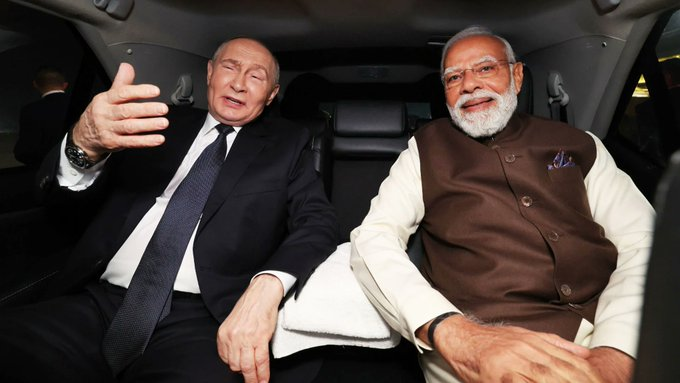
NEW DELHI / MOSCOW — In a major strategic reversal, India is aggressively rebuilding its energy partnership with Russia following massive supply disruptions triggered by the U.S.-Israel war on Iran. According to a Reuters report on Friday, March 27, 2026, New Delhi and Moscow have reached a “verbal agreement” to resume direct sales of Liquefied Natural Gas (LNG) and significantly ramp up crude oil imports, which could soon account for 40% of India’s total oil supply.
The move marks the end of a brief period of “diplomatic alignment” with the Trump administration, as the reality of a closed Strait of Hormuz forces India to prioritize domestic energy security over Western trade concessions.
The “Hormuz Factor”: Why India is Pivoting
Before the conflict began on February 28, India received nearly 60% of its oil and 90% of its LPG from the Persian Gulf. The effective closure of the Strait has created a “cardiac arrest” for these traditional routes.
- Strategic Necessity: With Gulf supplies stranded, India has turned to Russia’s Urals crude, which is a “medium-sour” grade similar to Middle Eastern varieties, making it an ideal substitute for Indian refineries.
- The 40% Target: Imports of Russian crude could double from January levels within the next 30 days. Analysts at Kpler estimate that Russian inflows could surge to 1.8–2 million barrels per day (Mbd) in the near term.
- LNG Resumption: For the first time since the start of the Ukraine war, Russia is preparing to resume direct LNG sales to India. Negotiations for these deals, which were sidelined by Western sanctions, could now be concluded in weeks.
The Sanctions Standoff: Seeking a Washington Waiver
The pivot back to Moscow puts New Delhi on a collision course with the U.S. Treasury, which recently imposed a 25% to 50% tariff on Indian goods partly over its previous Russian oil purchases.
- The “Stop-Gap” Waiver: On March 5, the U.S. issued a temporary 30-day waiver allowing India to offload Russian oil already “stranded at sea.”
- The New Request: New Delhi is now lobbying Washington for a permanent or extended waiver, arguing that the Iran war has left it with no viable alternative.
- U.S. Pressure vs. Market Reality: While U.S. Treasury Secretary Scott Bessent described the waiver as a “short-term measure” to prevent global energy hostage-taking, Indian officials have stated they will continue purchases regardless of U.S. permission to protect their economy from a “fuel tragedy.”
Russia’s “War Chest” Windfall
While the war in Iran is a humanitarian and economic crisis for many, it has provided a massive “budget windfall” for the Kremlin.
| Metric | Pre-War (Feb 2026) | Current (March 27, 2026) |
| Urals Price | $56 / barrel | $104 / barrel (80% increase) |
| Daily Revenue | ~€460 mn / day | ~€492 mn / day |
| Indian Market Share | ~20% | Projected 40% |
| LNG Exports | Stagnant due to EU bans. | Redirecting to Asia (India, China). |
What’s Next?
The “Islamabad Channel” peace talks between the U.S. and Iran, scheduled for April 6, will be the deciding factor. If the Strait remains closed, India is expected to formalize long-term, multi-year contracts with Russian energy giants like Rosneft and Novatek. Meanwhile, Indian refiners have already secured 60 million barrels of Russian oil for April delivery to ensure a 60-day domestic buffer.
Analysis: How the Iran War is Reshaping Global Energy Alliances
This video provides a deep dive into the shifting geopolitical landscape as major Asian economies like India and China pivot toward Russia to mitigate the energy risks of the Middle East conflict.
