
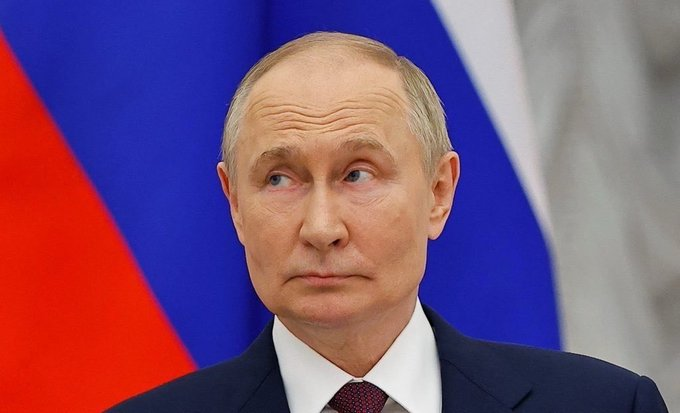

MOSCOW / WASHINGTON — The Kremlin issued its most severe warning to date on Friday, March 27, 2026, cautioning that any move by the United States to transition from an air campaign to a ground operation in Iran would trigger “dire and unpredictable consequences” for global security. In a televised address from Moscow, President Vladimir Putin compared the potential fallout of a ground war to the COVID-19 pandemic, suggesting it would cause a systemic collapse of international logistics, energy markets, and regional stability that could take a decade to repair.
The warning comes as satellite imagery reveals a massive buildup of U.S. forces in the Gulf, signaling a possible shift in Operation Epic Fury toward a land-based intervention.
The “Pandemic-Level” Warning
President Putin’s rhetoric has shifted from legal condemnation to a warning of global economic “contagion.”
- Economic Paralysis: Putin stated that a ground war would “dramatically slow the development of all regions and continents,” disrupting supply chains for hydrocarbons, metals, and fertilizers.
- Predictability Gap: “It seems to me that those who are involved in the conflict cannot predict anything themselves,” Putin remarked, stressing that the “man-made crisis” is spiraling beyond Washington’s control.
- Reciprocal Support: While denying Western allegations of providing real-time intelligence to Tehran, the Kremlin confirmed it has supplied “certain types of military products” to help Iran defend its sovereignty.
The Ground War Trigger: 1 Million Troops Mobilized
The Russian warning is a response to the rapid militarization of the Iranian border and the arrival of heavy U.S. reinforcements.
- Iranian Mobilization: On Thursday, March 26, Tehran announced the mobilization of 1 million troops to “fight off a potential American invasion,” citing the movement of U.S. Marine units and the 82nd Airborne into theater.
- The Largest Deployment Since Iraq: Analysts note that the final week of March has seen the largest influx of Western soldiers to the Middle East in over 20 years, with over 9,000 targets already struck by air to clear the way for possible “stabilization forces.”
- Russian Intelligence: Reports suggest Moscow is providing Iran with satellite imagery and upgraded drone technology to match Russian designs, specifically to improve Iranian targeting of U.S. troop concentrations in the Gulf.
The “G7” Friction Point
Russia’s warning has cast a shadow over the G7 summit in France, where European leaders are increasingly worried about “Russian spill-over.”
| Country | Stance on Ground Invasion |
| United States | “All options on the table”; amassing troops to enforce the April 6 deadline. |
| Russia | “Catastrophic”; warns of a “radiological and humanitarian disaster.” |
| UK / EU | “Deep Concern”; accusing Russia of enhancing Iran’s ability to strike U.S. bases. |
| Poland | “Escalation Imminent”; PM warned today of a major kinetic shift in the coming days. |
What’s Next?
As the 10-day pause on infrastructure strikes continues, Russia is positioning itself as the primary diplomatic counter-weight to the U.S. ultimatum. Foreign Minister Sergey Lavrov is reportedly working with UN and regional partners to make a ground operation “impossible” through a series of “Security Council red lines.” However, if the 15-point U.S. proposal is not accepted by April 6, the world may face the very ground confrontation Moscow claims will “plunge the Middle East into an abyss.”
Would you like me to track the specific movement of the 82nd Airborne relative to the Iranian border or provide a breakdown of the 15-point U.S. proposal currently being debated?
