
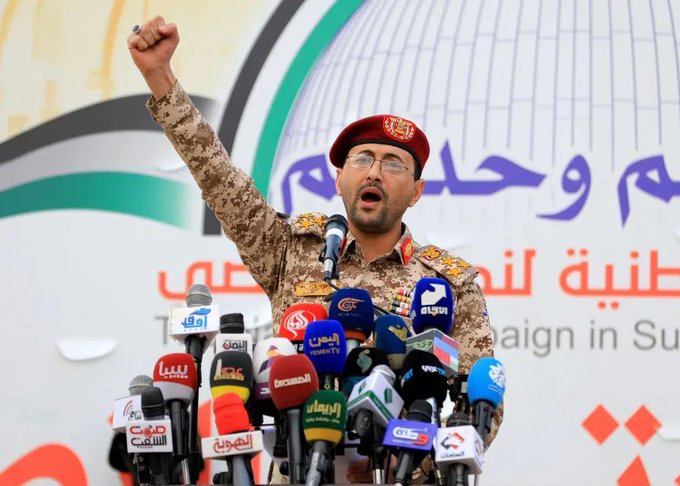
SANAA, YEMEN — In a major televised address on Friday, March 27, 2026, the Yemeni Houthi movement (Ansarullah) officially declared that its “fingers are on the trigger” to intervene in the widening conflict between Iran, the United States, and Israel. The statement, delivered by military spokesperson Brigadier General Yahya Sarea on Al-Masirah TV, marks the group’s most direct threat to enter the month-old war.
The Red Lines: Conditions for Houthi Entry
The Houthi leadership outlined three specific “red lines” that would trigger their immediate and direct military participation in the conflict:
- New Regional Alliances: The group warned it will intervene if any other regional nations join the U.S.-Israeli coalition to launch attacks against Iran or its allies.
- Red Sea Militarization: Sarea explicitly stated that Houthi forces are prepared to act if the Red Sea is used as a platform or “launchpad” for hostile military operations targeting the Islamic Republic.
- Horizontal Escalation: The movement called for an immediate halt to what it termed “aggression” against Iran, Iraq, Lebanon, and Palestine, signaling they will no longer remain on the sidelines if the “Axis of Resistance” continues to be degraded.
Strategic Context: A Month of Conflict
The Houthi ultimatum comes as Operation Epic Fury enters its 29th day. Since the initial U.S.-Israeli strikes on February 28—which resulted in the death of former Supreme Leader Ali Khamenei—the region has seen unprecedented volatility.
- Recent Escalation: The Houthi threat follows Friday’s heavy strikes on Iranian nuclear facilities in Yazd and Arak, as well as the destruction of Iran’s primary steel plants in Isfahan and Ahvaz.
- Military Readiness: Houthi leader Abdul-Malik al-Houthi reiterated on Thursday that the movement is “not neutral” and has spent the last month mobilizing its missile and drone units along the Red Sea coast.
- The “Siege” Narrative: Sarea also cautioned against any further tightening of the maritime blockade on Yemen, linking their local grievances to the broader regional defense of Iran.
Global Impact and Risks
The prospect of Houthi intervention significantly complicates the security of global trade routes.
| Potential Theater | Strategic Risk |
| Bab al-Mandab Strait | Potential blockade of the southern entrance to the Red Sea, mirroring the closure of Hormuz. |
| Eilat & Southern Israel | Resumption of long-range missile and drone attacks on Israeli port infrastructure. |
| U.S. Naval Assets | Increased targeting of the USS Abraham Lincoln carrier group and regional destroyer screens. |
The Diplomatic Channel
This warning coincides with Pakistan’s high-stakes mediation efforts. Foreign Minister Ishaq Dar is currently relaying a 15-point U.S. proposal to Tehran. Analysts suggest the Houthi statement may be intended to provide Iran with additional leverage at the negotiating table, signaling that the U.S. and Israel face a multi-front war if a ceasefire is not reached soon.
Summary of Key Figures
- Yahya Sarea: Houthi Military Spokesperson (Issued the “Trigger” warning).
- Abdul-Malik al-Houthi: Leader of the Houthi movement (Confirmed non-neutrality).
- Donald Trump: U.S. President (Maintains an April 6 deadline for the Strait of Hormuz).
- Ishaq Dar: Pakistani Foreign Minister (Lead mediator for the 15-point plan).
