
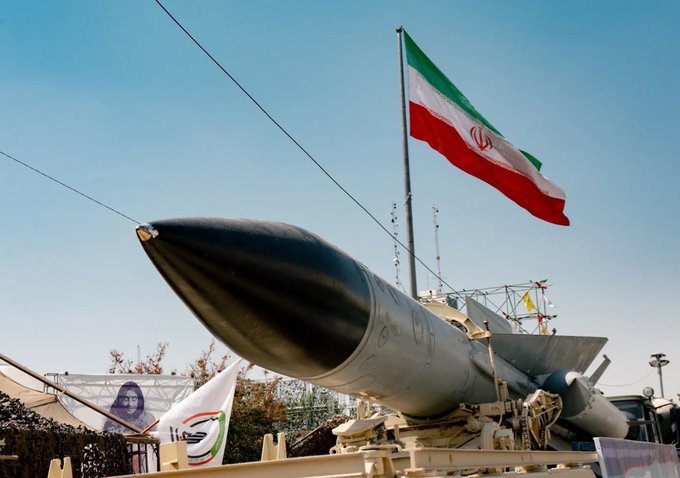

WASHINGTON — In a stunning admission from the White House on Saturday, March 28, 2026, President Donald Trump stated that U.S. intelligence was “unaware” of Iran’s capability to launch missiles covering a distance of 2,700 miles (approximately 4,350 km).
The President’s comments follow a week of intense debate over a specific Iranian missile test that has effectively “doubled” Tehran’s demonstrated strike range overnight, upending years of Western military assumptions.
The “2,700-Mile” Shattered Assumption
For years, the U.S. and Israel operated under the belief that Iran had a self-imposed or technical limit of 2,000 kilometers (1,242 miles). This week’s events have fundamentally changed that calculus:
- The Diego Garcia Strike: On March 21, Iran launched a ballistic missile targeting the joint US-UK base at Diego Garcia in the Indian Ocean—a distance of over 2,500 miles from southern Iran.
- The Interception: While the U.S. successfully intercepted the missile, the fact that it reached the vicinity of the base proved that Iran has mastered multi-stage or “satellite-like” launch technology to extend its range.
- Intelligence Failure: President Trump noted that while the U.S. knew about Iran’s space program, the “transition of that technology to a militarily viable long-range missile” happened faster than the CIA or DIA had projected.
“We knew they were working on things, but they kept this very quiet. They used their space program as a cover. We were told 2,000 kilometers was the limit. Suddenly, it’s 4,000 plus. It’s a very big difference.” — President Donald Trump
The European Threat Vector
The most significant implication of this range extension is the sudden vulnerability of Western Europe. A 2,700-mile range puts several major capitals directly in the crosshairs:
| Target City | Distance from Iran | Status |
| Athens, Greece | ~1,600 miles | Within old and new range. |
| Berlin, Germany | ~2,200 miles | New vulnerability |
| Paris, France | ~2,600 miles | New vulnerability |
| London, UK | ~2,750 miles | On the edge of new capability |
While UK Prime Minister Keir Starmer stated on Monday that there is “no current assessment” that Britain is being specifically targeted, the Israeli army has warned that “London, Paris, and Berlin” are now within Iran’s reach.
Technical Analysis: How Did They Do It?
Military experts, including former IDF air defense chief Ran Kochav, suggest Iran likely used a two-stage launch process similar to their Qaem-100 satellite carrier.
- Dual-Use Tech: By swapping a satellite for a lighter warhead, Iran successfully converted a civilian-branded space rocket into an Intermediate-Range Ballistic Missile (IRBM).
- The “Modified R-27” Theory: Some intelligence reports suggest Iran may have modified USSR-era R-27 submarine-launched missiles to fire from land-based platforms, significantly boosting their kinetic energy.
The “Next Step” in Operation Epic Fury
President Trump’s admission of this intelligence gap appears to be a justification for the “new wave” of strikes on Tehran’s universities and research centers reported this morning.
“We are not going to wait for them to perfect the re-entry vehicle,” the President added, referring to the technical challenge Iran still faces in ensuring a warhead survives the heat of re-entering the atmosphere at such long ranges.
