
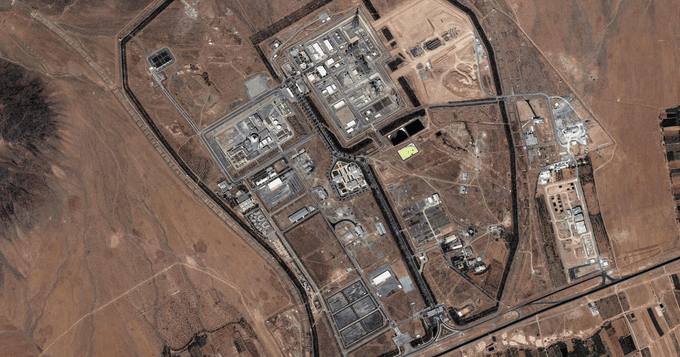
TEHRAN / JERUSALEM — In a major expansion of the 29-day conflict, the Israeli Air Force (IAF) carried out precision strikes on Friday, March 27, 2026, targeting two critical pillars of Iran’s nuclear infrastructure. The Israeli military confirmed the operation hours after Iranian state media reported explosions at a heavy water plant and a uranium processing site.
The Targets: Arak and Ardakan
The IDF described the mission as a “strategic necessity” to prevent the Iranian regime from achieving a “breakthrough” nuclear capability during the ongoing war.
1. Khondab Heavy Water Complex (Arak)
Located in central Iran, this facility is a key component of Iran’s potential plutonium pathway to a nuclear weapon.
- The Strike: The IAF targeted the IR-40 reactor infrastructure. The military noted that Iran had been attempting to “restore and rebuild” the site since it was damaged in the June 2025 conflict.
- IDF Statement: “This is a key plutonium production site. Despite international commitments, the regime has systematically avoided converting the reactor to a non-weapons grade configuration.”
- Status: Iranian officials confirmed the strike occurred in “two stages” but reported no casualties or signs of radiation leakage.
2. Shahid Rezayee Nejad Plant (Ardakan, Yazd)
This facility is the only one of its kind in Iran, responsible for the chemical and mechanical processing of uranium ore.
- The Strike: Israeli jets hit the “central infrastructure” used for yellowcake production (a concentrated uranium powder used as a precursor for enrichment).
- Significance: By targeting this upstream facility, the coalition aims to sever the supply of raw materials needed for Iran’s centrifuge cascades at Natanz and Fordow.
- Status: Iran’s Atomic Energy Organization (AEOI) confirmed the strike, stating that safety measures prevented any radioactive release to the surrounding areas.
Global and Regulatory Reaction
The International Atomic Energy Agency (IAEA) was notified of the strikes and has been monitoring the situation closely.
- No Radiation Risk: Director General Rafael Grossi confirmed that as of Saturday morning, there has been no increase in off-site radiation levels.
- The “Red Line”: Grossi renewed calls for “maximum restraint,” warning that strikes on operational or near-operational nuclear sites represent the “reddest of lines” that could lead to a cross-border radiological disaster.
Retaliation: The “Heavy Price” Vow
The strikes on these “civilian nuclear sites”—as Tehran describes them—have triggered an immediate and violent response from the “Axis of Resistance.”
- The Houthi Launch: Early on Saturday, the Houthis launched their first ballistic missile of the war at southern Israel (intercepted by Arrow 3) specifically citing the strikes in Arak and Yazd as the trigger.
- The Saudi Base Attack: Iran responded directly on Friday with a missile strike on the Prince Sultan Air Base in Saudi Arabia, wounding at least 10 U.S. troops.
- The “Energy Pause”: These nuclear strikes occurred even as President Trump extended a 10-day pause on targeting Iranian oil and gas infrastructure, which is set to expire on April 6.
| Facility | Location | Nuclear Role | Status (March 28, 2026) |
| Khondab (Arak) | Markazi Province | Heavy Water / Plutonium | Struck in 2 phases; no leaks. |
| Ardakan (Yazd) | Yazd Province | Yellowcake Production | Unique facility; central infra damaged. |
| Bushehr | Persian Gulf Coast | Power Generation | Reported projectile hit nearby (March 27). |
Developing: The Iranian Foreign Ministry has warned that these attacks have “killed the 15-point ceasefire proposal,” though mediation efforts in Islamabad are still scheduled for Monday.
