
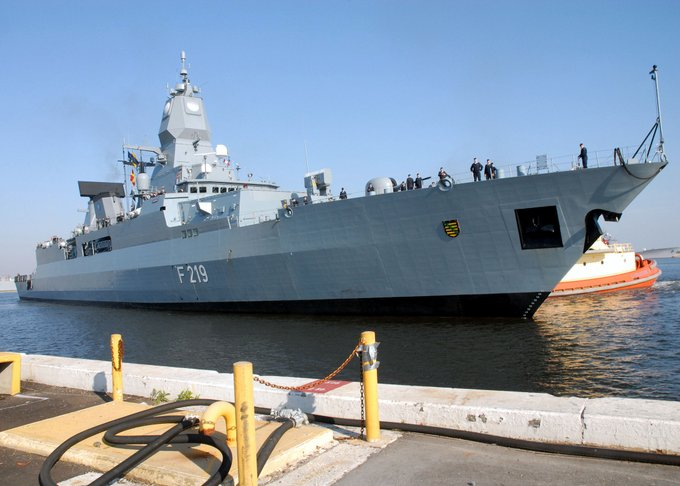
LONDON / NORTH ATLANTIC — In a move that highlights the critical strain on Britain’s surface fleet, the German Navy frigate FGS Sachsen has assumed command of a standing NATO maritime task group in the North Atlantic. The handover, confirmed by the German Embassy in London on Thursday, March 26, 2026, occurred because the Royal Navy’s designated flagship, HMS Dragon, was diverted to the Mediterranean.
The shift in command has sparked a heated debate in Westminster over the UK’s “collapsing” naval capacity, as the Royal Navy struggles to meet its international obligations while defending its own overseas bases.
The Mediterranean Diversion: Defending Cyprus
The Type 45 destroyer HMS Dragon arrived in the Eastern Mediterranean on Monday, March 23, following a high-stakes “sprint” from the UK.
- The Catalyst: The ship was deployed to bolster the defenses of RAF Akrotiri in Cyprus, which was struck by an Iranian-made drone on March 1.
- The “Herculean” Refit: To get the ship to sea, Royal Navy and civilian teams reportedly completed six weeks of scheduled maintenance in just six days.
- Current Mission: HMS Dragon is now utilizing its Sea Viper missile system to provide an “air defense umbrella” over Cyprus, working alongside French and Greek naval assets to intercept potential “Axis of Resistance” threats.
The Naval Availability Crisis
The reliance on Germany to lead a mission in what is traditionally considered the Royal Navy’s “backyard” (the North Atlantic) has exposed a severe shortage of operational warships.
- Destroyer Shortage: Of Britain’s six Type 45 destroyers, only three were reportedly available for operations earlier this month, with the remainder sidelined for major engine refits (Project Napier) or deep maintenance.
- The “Bailout” Label: Conservative MP Ben Obese-Jecty branded the NATO command shift a “bailout,” suggesting the Royal Navy has essentially “run out of ships” to fulfill its flagship roles.
- The Contractor Issue: Trade unions, including Prospect, have alleged that cost-cutting measures—specifically a contract that limited resupply and rearmament services to “office hours”—contributed to the three-week delay between the Cyprus attack and the ship’s arrival on station.
NATO Leadership: A “Close Partnership”
Despite the domestic criticism, the Royal Navy and NATO leadership have framed the move as a demonstration of alliance flexibility.
- Shared Command: A Royal Navy-led battle staff has embarked on the FGS Sachsen to command the maritime task force.
- Unwavering Commitment: A Royal Navy spokesperson stated that the UK will fulfill its leadership role in the task group (SNMG1) as planned, albeit from a German hull until a British vessel becomes available.
| Ship | Role | Status (March 28, 2026) |
| HMS Dragon | Air Defense | Active off Cyprus (Eastern Med) |
| FGS Sachsen | NATO Flagship | Leading SNMG1 (North Atlantic) |
| HMS Duncan | Domestic Defense | Retained in UK waters for national security |
| HMS Diamond | Maintenance | Currently undergoing repairs/refit |
Developing: This naval shortfall is expected to be a major talking point at the Islamabad Summit on Monday, as Gulf allies like Saudi Arabia and the UAE look for long-term maritime security guarantees that the Royal Navy is currently struggling to provide.
