
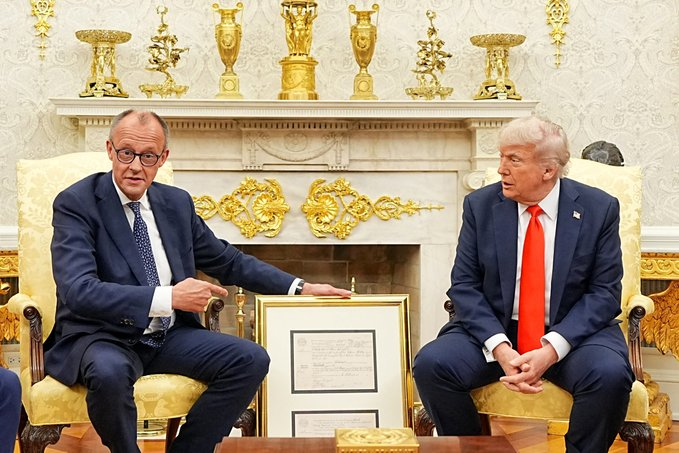
WASHINGTON / BERLIN — Building on his “pay-to-play” ultimatum for NATO, President Donald Trump is reportedly considering a massive reduction of the U.S. military footprint in Germany. According to The Telegraph, the administration is weighing the withdrawal of approximately 35,000 active-duty personnel, with a significant portion potentially being redeployed to Hungary.
The move marks a dramatic return to a policy Trump first initiated in 2020, which was later paused by the previous administration.
The “Frustration” Factor
White House sources indicate that the President’s renewed push for withdrawal is driven by two primary grievances:
- Defense Spending: Trump remains “frustrated” that Germany, despite increasing its budget since the 2022 invasion of Ukraine, still relies heavily on the U.S. security umbrella without reaching the new, more aggressive spending targets he favors.
- The Ukraine Conflict: The President has reportedly accused European leaders, particularly in Berlin, of “pushing for war” in Ukraine, contrasting their stance with his own desire to reach a swift negotiated settlement.
The Hungary Pivot: Why Budapest?
The proposal to move troops from Germany to Hungary reflects a shift in the U.S. alliance structure under the current administration:
- Political Alignment: Trump and Hungarian Prime Minister Viktor Orbán share a skeptical view of traditional international institutions. Orbán’s recent vetoes on certain EU military aid packages for Ukraine align with Trump’s “America First” approach to foreign spending.
- Reward for Compliance: Hungary is viewed as a “loyal” partner that meets its defense obligations and shares Washington’s focus on national sovereignty over multilateral mandates.
- Frontline Utility: Moving assets further east aligns with the Pentagon’s broader “Pivot to the East,” shifting resources away from “rear-area” hubs like Germany toward frontline NATO states closer to Russia and the Middle East.
A “World Turned Upside Down” for Berlin
The news has caused a “dire situation” for German Chancellor Friedrich Merz. The potential loss of U.S. troops would not only weaken Germany’s defense but also devastate the local economies surrounding major bases.
- Ramstein and Stuttgart: These hubs serve as the nerve center for EUCOM (European Command) and AFRICOM. A total withdrawal would require a multi-billion dollar relocation of the command structures that manage U.S. operations across Africa and the Middle East.
- The Nuclear Question: With the U.S. “protective shield” thinning, some German policymakers have reportedly begun a quiet debate on whether Berlin should consider acquiring its own national nuclear deterrent, though Chancellor Merz has publicly renounced the idea.
| Asset at Risk | Significance | Potential New Home |
| 35,000 Troops | Backbone of U.S. power in Europe | Hungary / Poland / U.S. |
| EUCOM HQ | Coordinates all European ops | Mons, Belgium (Proposed) |
| Ramstein Air Base | Global transport & drone hub | Likely to remain, but downsized |
| B61 Nuclear Bombs | NATO nuclear sharing | Uncertain |
The Middle East Connection
The withdrawal from Germany is also being framed as a way to free up personnel for Operation Epic Fury. As the U.S. considers sending an additional 10,000 ground troops to the Middle East to secure sites like Kharg Island, the President views the German-based units as a “reservoir” of manpower that is currently “wasted” on ungrateful allies.
