
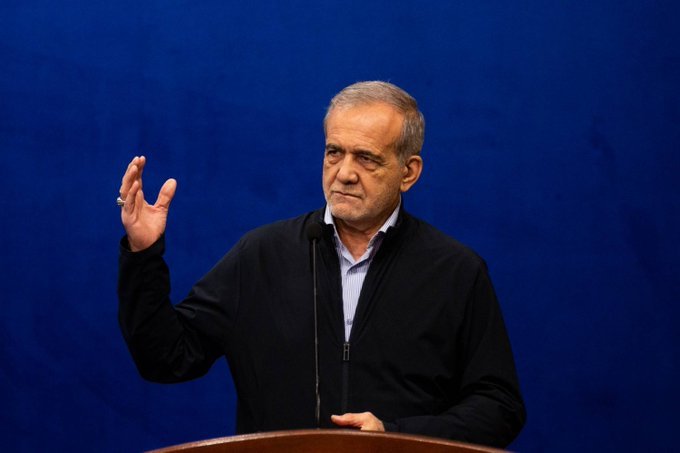
TEHRAN / ISLAMABAD — In a stern rebuff to ongoing diplomatic efforts, Iranian President Masoud Pezeshkian declared on Saturday, March 28, 2026, that the United States has proven itself an untrustworthy partner by continuing a campaign of assassinations and infrastructure strikes while ostensibly pursuing a ceasefire.
The President’s comments, made during an urgent one-hour telephone call with Pakistan’s Prime Minister Shehbaz Sharif, mark a significant hardening of Tehran’s position just two days before a critical regional summit in Islamabad.
The “Trust Gap”: A War of Contradictions
President Pezeshkian outlined two specific grievances that he argues have “deepened the distrust” between Tehran and Washington:
- Assassination as Diplomacy: Pezeshkian noted that Iran has now been targeted twice during active diplomatic and nuclear negotiations. He cited the February 28 assassination of Supreme Leader Ali Khamenei (which occurred at the war’s onset) and the recent killing of IRGC Navy Commander Alireza Tangsiri as proof that the “aggressors” are using talks as a distraction for decapitation strikes.
- Broken Promises on Energy: Despite President Trump’s public promise to delay strikes on Iran’s energy infrastructure until April 6, Pezeshkian pointed to recent hits on economic sites in Ahvaz and Isfahan, as well as a projectile landing near the Bushehr Nuclear Power Plant on Friday.
“Bombing infrastructure and assassinating Iranian figures show that the aggressors cannot be trusted… These contradictions have further deepened Iran’s distrust toward the United States.” — President Masoud Pezeshkian (March 28, 2026)
The Strategic Deadlock
The President’s rhetoric places the 15-point U.S. ceasefire proposal—which Iran officially “rejected” earlier this week in favor of its own counter-proposal—in extreme jeopardy.
The Conflicting Demands
| The U.S. 15-Point Plan | The Iranian Counter-Proposal |
| Dismantle nuclear program & enrichments. | Recognition of “legitimate rights” (Nuclear). |
| Limit missile range and capabilities. | Payment of reparations for strike damage. |
| Cease support for the “Axis of Resistance.” | Firm international guarantees against future hits. |
| Ensure freedom of navigation in Hormuz. | Full Iranian sovereignty over the Strait. |
Regional Warnings: “A Natural Response”
Pezeshkian also used the call with PM Shehbaz to issue a fresh warning to Gulf neighbors (Saudi Arabia, UAE, Kuwait, Qatar).
- Targeting the Origin: He expressed regret that Muslim territories are being used as “launchpads” for U.S. strikes. He warned that while Iran views these nations as “brothers,” a defensive strike against the origin of an attack is a “natural response.”
- The “Islamabad” Hope: Despite the heated rhetoric, Pezeshkian thanked Pakistan for its mediation. PM Shehbaz reaffirmed Pakistan’s solidarity and condemned the hits on Iranian economic centers, positioning Islamabad as the final “bridge” for a possible deal before the April 6 deadline.
Developing: Foreign Ministers from Turkey, Saudi Arabia, and Egypt are scheduled to land in Islamabad tomorrow for the Quadrilateral Summit. The success of this meeting now hinges on whether Pakistan can convince Iran that the “trust gap” can be bridged by tangible U.S. concessions.
