
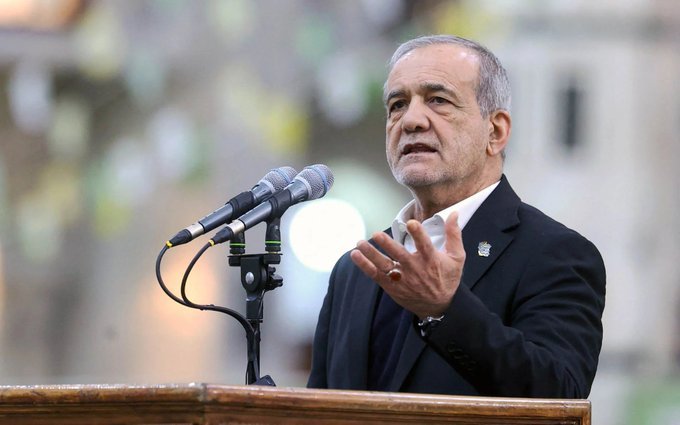
TEHRAN / ISLAMABAD — Iranian President Masoud Pezeshkian issued a dual warning on Saturday, March 28, 2026, calling it “unfortunate” that some Muslim nations are allowing their territories to be used as launchpads for U.S. and Israeli strikes against Iran.
During an extensive one-hour telephone call with Pakistan’s Prime Minister Shehbaz Sharif, Pezeshkian cautioned regional leaders that Israel aims to intentionally draw neighboring countries into a wider, more destructive conflict.
The Strategic Warning to Muslim Nations
Pezeshkian’s rhetoric underscored the immense pressure Tehran is placing on Gulf neighbors (including Saudi Arabia, the UAE, and Kuwait) to distance themselves from the U.S. military presence on their soil.
- “Brotherly” Regret: Pezeshkian described neighboring Muslim countries as “brothers” but expressed deep regret over their logistical role in the current war. He argued that hosting U.S. bases makes these nations complicit in the “assassinations and infrastructure destruction” hitting Iranian cities.
- The “Zionist” Expansion Plan: The President explicitly warned that the “Zionist entity” (Israel) is seeking to expand the scope of the war beyond Iran’s borders. He urged regional capitals to be “cautious,” suggesting that Israel benefits when the “flame of war” consumes the entire Middle East.
- The “Natural Response” Doctrine: Reaffirming Iran’s stance, Pezeshkian stated that while Iran seeks peace with its neighbors, a defensive strike against the origin of any attack is a “natural and legitimate right” under international law.
The Call with PM Shehbaz Sharif
The conversation with the Pakistani Prime Minister was described as “detailed and extensive,” serving as a final diplomatic check before the Islamabad Quadrilateral Summit begins on Monday.
- Trust as a Prerequisite: Pezeshkian told PM Shehbaz that “mutual trust” is the missing ingredient for any meaningful dialogue. He cited the recent strikes on energy infrastructure in Ahvaz and Isfahan—reportedly occurring despite U.S. assurances—as the primary reason for Tehran’s skepticism.
- Solidarity from Islamabad: PM Shehbaz reiterated Pakistan’s “strong condemnation” of Israeli strikes on Iranian civilian and economic infrastructure. He briefed Pezeshkian on his efforts to engage the U.S. and Gulf states to create a “conducive environment” for peace.
- The Casualty Toll: PM Shehbaz offered condolences for the loss of over 1,900 precious lives in Iran since the war began on February 28.
Regional Context: The “Basing” Dilemma
Pezeshkian’s warning comes as several Gulf states face a “neutrality crisis”:
| Country | Key Asset | Recent Status |
| Kuwait | Int’l Airport / Ali Al-Salem | Radar systems destroyed by Iranian drones Saturday. |
| Saudi Arabia | Prince Sultan Air Base | Struck Friday; U.S. AWACS and tankers damaged. |
| UAE | Al Dhafra / Dubai Hubs | Depot struck Saturday; Tehran claims it was a “U.S. hideout.” |
| Oman | Port of Salalah | Logistics vessel hit Saturday; port infrastructure damaged. |
The Road to the Islamabad Summit
With Foreign Ministers from Turkey, Saudi Arabia, and Egypt arriving in Islamabad tomorrow, Pezeshkian’s message is clear: Iran will not consider a ceasefire while neighboring lands are used as “launchpads.”
The success of Monday’s summit now rests on whether Pakistan and its partners can secure a “basing freeze” or a definitive “no-fly zone” over neutral territories—a key demand in Iran’s five-point counter-proposal.
