

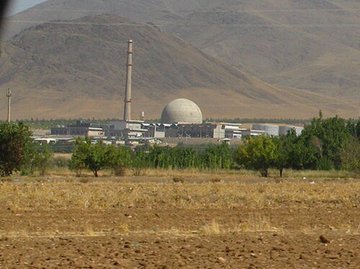
VIENNA / TEHRAN – In a statement released via its Incident and Emergency Centre, the IAEA confirmed that the heavy water production plant at the Khondab complex in central Iran has sustained “severe structural damage” and is currently inoperable. The agency noted that while the production plant was neutralized, the associated Khondab Heavy Water Research Reactor (KHRR) contained no declared nuclear material at the time of the strike, mitigating the risk of a radiological release.
The Strike: Israel Targets “Plutonium Infrastructure”
The Israel Defense Forces (IDF) took credit for the operation shortly after the strikes on Friday, describing the Khondab site as a “key plutonium production site for nuclear weapons.”
- The Reason for the Hit: Israeli military officials claimed that Iran had been “systematically” attempting to restore and upgrade the reactor’s capabilities in violation of previous international commitments.
- Prior History: The facility had been partially damaged during the June 2025 conflict, but the IDF alleged that recent “reconstruction attempts” necessitated a follow-up strike to permanently disable the site.
IAEA Assessment and Radiation Safety
IAEA Director General Rafael Mariano Grossi reiterated the agency’s call for military restraint, while confirming the technical status of the site:
- No Radiological Leak: Both the IAEA and Iran’s Atomic Energy Organization (AEOI) have confirmed that no elevation in radiation levels has been detected in the surrounding Markazi Province.
- Severe Infrastructure Damage: Satellite analysis indicates that the cooling systems and secondary circuits—critical for heavy water production—were the primary targets and have been effectively destroyed.
- Loss of Monitoring: The IAEA noted that it has not had physical access to the site since May 2025, but was able to verify the facility’s status through “independent analysis of high-resolution imagery.”
Strategic Context: The Two-Pronged Nuclear Strike
The neutralization of the Khondab plant was part of a larger, coordinated operation on Friday that also targeted:
- Yazd Province (Ardakan): A separate strike hit the Ardakan Yellowcake Production Plant, Iran’s only facility of its kind.
- Bushehr: Reports indicate a projectile also struck the premises of the Bushehr Nuclear Power Plant, though that facility remains operational with no reported leaks.
| Site | Status | Strategic Importance |
| Khondab (Arak) | Non-Operational | Production of heavy water/potential plutonium path. |
| Ardakan (Yazd) | Severely Damaged | Production of “Yellowcake” for uranium enrichment. |
| Bushehr Plant | Operational | Iran’s primary civil nuclear power generator. |
Diplomatic Fallout
The destruction of a major IAEA-monitored site has drawn mixed international reactions. While the U.S. has supported the strikes as a “necessary preventive measure,” German Chancellor Friedrich Merz criticized the move, warning that the U.S. and Israel are becoming “increasingly entangled” in a conflict without a clear exit strategy.
Meanwhile, Pakistan’s Foreign Ministry—currently hosting regional peace talks—expressed concern that the strikes on nuclear infrastructure could “complicate the atmosphere” for the upcoming diplomatic sessions in Islamabad.
