
The Israeli Ministry of Defense (IMOD) has officially moved the nation to a “war economy” footing, tripling the production of missile interceptors and munitions as of March 30, 2026. Military sources indicate that the output is expected to rise to four times normal levels within the coming weeks. The surge follows a series of reports—initially published by Haaretz and Semafor—suggesting that both Israel and the United States are facing a strategic depletion of the air defense stockpiles required to sustain the month-long conflict with Iran.
The Production Race
IMOD Director General Amir Baram declared “munitions independence” a top strategic priority during an emergency meeting with the heads of Elbit Systems, Rafael, and Israel Aerospace Industries (IAI).
- Scaling Up: Production lines for the Arrow 3, David’s Sling, and Iron Dome are now operating 24/7.
- The “Cluster” Factor: The urgency is driven by Iran’s recent use of cluster-warhead ballistic missiles, which force Israeli air defenses to expend multiple interceptors per incoming threat to prevent submunitions from reaching urban centers.
- Budgetary Surge: The Israeli government recently approved an “urgent” $825 million (NIS 2.6 billion) allocation specifically for the procurement of interceptors, as the total cost of munitions since February 28 has surpassed $3.8 billion.
The U.S. Airlift and “Depletion” Reports
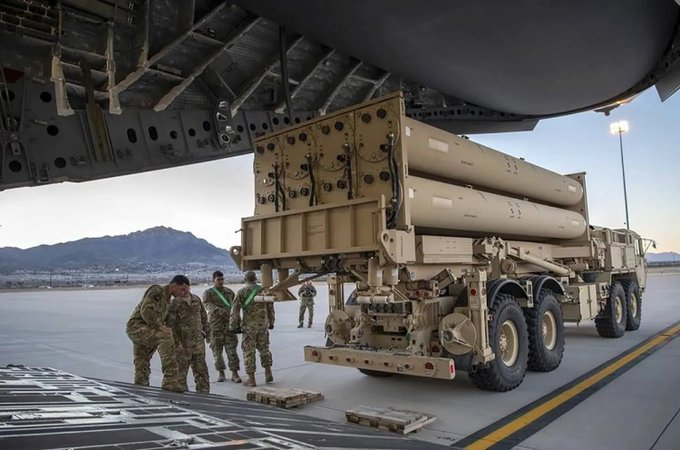
Despite the arrival of more than 200 U.S. cargo planes—primarily C-17s and C-5 Galaxies—delivering tens of thousands of tons of military hardware, the sheer volume of Iranian and Hezbollah barrages is reportedly outstripping supply.
- The Semafor Report: On March 14, U.S. officials claimed Israel is running “critically low” on long-range interceptors. While the IDF officially denied a “shortage,” internal documents suggest a “growing deficit.”
- U.S. Strain: Reports indicate that the U.S. has already expended roughly one-quarter of its global THAAD (Terminal High Altitude Area Defense) interceptor stockpile during the current theater operations.
- Logistical Bottleneck: To maintain the defense of Israel, the Pentagon has reportedly begun relocating THAAD assets from South Korea to the Middle East, a move that has raised alarms about U.S. readiness in the Pacific.
Strategic Dilemmas on the Ground
The shortage has forced the Israeli Air Force (IAF) into making high-stakes “real-time” decisions that were previously unthinkable:
- Selective Interception: Haaretz reports that the IDF has begun allowing some incoming projectiles to fall in “open areas” rather than intercepting them, a move intended to preserve high-value Arrow 3 stocks for targets heading toward critical infrastructure like the Dimona nuclear facility or the Bazan Refinery.
- System Malfunctions: A reported malfunction in a David’s Sling battery last week, which allowed a missile to strike near Arad, was attributed by some analysts to the “unprecedented strain” on the software and hardware of the multi-layer shield.
- The “Iron Beam” Gap: While the laser-based Iron Beam system has been deployed in limited numbers, it is not yet available at the scale needed to replace traditional kinetic interceptors.
| Category | Status (as of Mar 30, 2026) | Trend |
| Munitions Production | 3x Normal Capacity | Rising to 4x. |
| U.S. Deliveries | 200+ Cargo Flights | Continuous/Daily. |
| Budget Allocation | $825 Million (Urgent) | Part of $46B Defense Budget. |
| Stockpile Health | “Critically Low” (Reported) | Denied by IDF; Validated by Experts. |
The “Ammunition Independence” Goal
The drive toward “independence” reflects a growing concern in Jerusalem that U.S. domestic politics—including President Trump’s focus on “Burden Sharing”—could lead to future pauses in supply. By quadrupling domestic production, Israel aims to create a “strategic buffer” that would allow it to sustain a high-intensity war for months without relying solely on the U.S. Air Bridge.
