
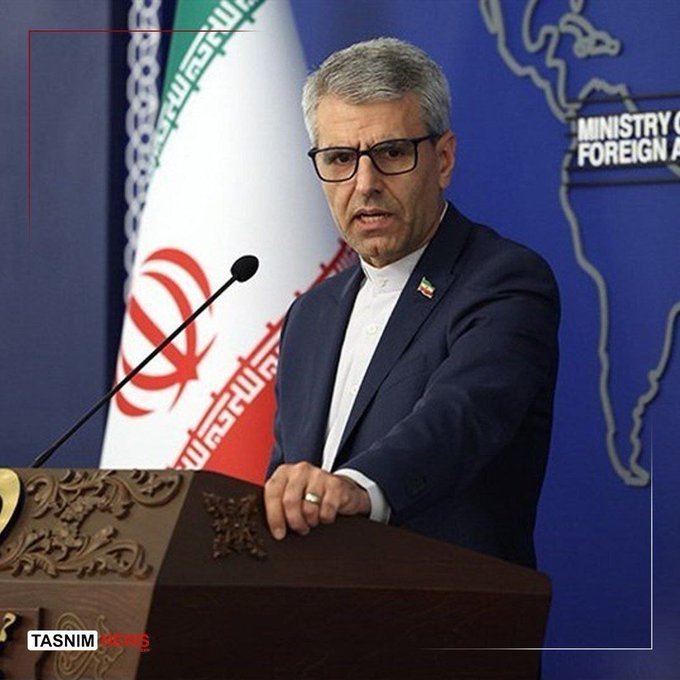
The Iranian Foreign Ministry issued a dual-pronged diplomatic rebuke on Monday, March 30, 2026, officially dismissing the latest U.S. peace proposal as “unreasonable” and publicly distancing itself from the high-profile quadrilateral talks currently taking place in Pakistan. Spokesperson Esmaeil Baghaei clarified during a press conference in Tehran that while “friendly countries” continue to relay messages, Iran is not a participant in the multilateral summitry currently dominating regional headlines.
The “Excessive” 15-Point Plan
The spokesperson’s critique was directed at a 15-point ceasefire roadmap recently transmitted to Tehran via Pakistani intermediaries.
- The “Illogical” Label: Baghaei characterized the U.S. demands—which reportedly include the total dismantlement of Iran’s nuclear program and the surrender of control over the Strait of Hormuz—as “unrealistic, illogical, and excessive.”
- Self-Defense Focus: “Our position is clear. We are under military aggression,” Baghaei stated. “Therefore, all our efforts and strength are focused on defending ourselves, not entertaining unreasonable demands.”
- The Sovereignty Gap: Tehran maintains that any deal must include its own five-point counter-proposal, which prioritizes war reparations, guarantees against future strikes, and formal recognition of Iranian sovereignty over the Strait of Hormuz.
Denial of Participation in Islamabad
In a significant blow to the optics of the “Islamabad Track,” Baghaei explicitly denied that Iran was part of the recent quadrilateral meeting between the foreign ministers of Pakistan, Saudi Arabia, Egypt, and Turkey.
- The “Observer” Status: While Pakistani Foreign Minister Ishaq Dar announced that Islamabad will host U.S.-Iran talks in the “coming days,” Tehran insists it is not currently involved in these structured regional meetings.
- No Direct Talks: Baghaei reiterated that no direct negotiations have occurred between Iranian officials and the Trump administration, labeling U.S. claims of “productive conversations” as propaganda aimed at deceiving public opinion.
- The Qalibaf Warning: Echoing this sentiment, Iranian Parliament Speaker Mohammad Baqer Qalibaf characterized the talk of negotiations as a “cover” for a potential U.S. ground invasion, warning that Iranian forces are “ready for any ground troops.”
Diplomatic Paradox: The Tanker “Tribute”
The denial of involvement creates a confusing contrast with events on the ground in the Persian Gulf.
- The Gesture: Just hours before Baghaei’s statement, Iran allowed 20 Pakistani-flagged oil tankers to transit the Strait of Hormuz.
- Differing Interpretations: President Trump described the move as a “present” and a sign that Iran is being “very reasonable.” Tehran, however, framed the release as a specific gesture of “respect” for Pakistan’s bilateral mediation, rather than an acceptance of the broader U.S. peace plan.
| Position | U.S. Perspective (Trump/Rubio) | Iranian Perspective (Baghaei/Araghchi) |
| Current Status | “In negotiations right now.” | “No intention of negotiating for now.” |
| Terms | 15-point “Nuclear Rollback.” | Rejected as “Excessive and Unreasonable.” |
| Islamabad Role | Primary venue for imminent talks. | “Not involved” in the meetings. |
| Strait of Hormuz | Must be opened immediately. | “Sovereignty” is non-negotiable. |
The April 6 Deadline
Despite Tehran’s public defiance, the clock is ticking on the “Islamabad Track.” President Trump has reportedly set a deadline of April 6 for a breakthrough, threatening to “completely obliterate” Iran’s electric plants and oil wells if the blockade of the Strait is not permanently lifted. With Iran now also reviewing a potential exit from the Nuclear Non-Proliferation Treaty (NPT), the window for a mediated settlement appears to be closing rapidly.
