
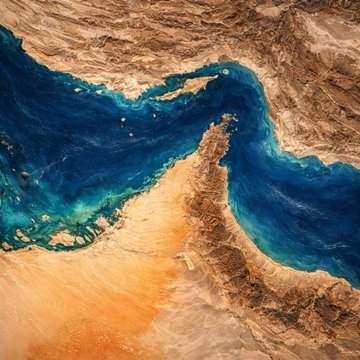
In a major turning point for global maritime trade during the month-long Iran conflict, two ultra-large Chinese container vessels successfully transited the Strait of Hormuz on Monday, March 30, 2026. The New York Times and maritime tracking services confirm that these are the first major container ships to navigate the chokepoint since the joint U.S.-Israeli offensive began on February 28.
The Vessels: CSCL Indian Ocean and CSCL Arctic Ocean
The two “mega ships,” operated by China’s state-owned COSCO SHIPPING Lines, are 20,000-TEU (twenty-foot equivalent unit) giants that had been stranded in the Persian Gulf for weeks.
- The Transit: After an initial attempt to cross on Friday was aborted due to “uncertain safety guarantees,” the CSCL Indian Ocean and CSCL Arctic Ocean successfully entered the strait on Monday morning.
- The Route: Tracking data from Marine Traffic showed the vessels utilizing a newly established “safe corridor” in Iranian territorial waters, passing between Larak and Qeshm islands rather than using the traditional deep-water international shipping lanes.
- Status: Both ships were sailing empty and broadcasting “CHINA OWNER” and “CHINESE CREW” on their Automatic Identification Systems (AIS) to signal their non-hostile status to the IRGC Navy.
The “Tehran Tollbooth” and the Yuan Factor
The successful passage highlights the emergence of a “permission-based” maritime model in the Gulf, which analysts have dubbed “Tehran’s Tollbooth.”
- Selective Access: Iran’s Foreign Minister Abbas Araghchi recently declared the strait open for “friendly nations,” specifically naming China, Russia, India, Iraq, and Pakistan.
- Payment in Yuan: Reports from Lloyd’s List suggest that some transits are being secured through the payment of “security fees” to Iranian authorities, often brokered by Chinese maritime service companies and paid in Chinese Yuan (CNY).
- The “Friendly” Label: While over 2,000 ships remain stranded and 22 civilian vessels have been struck since the war began, China’s status as Iran’s primary oil customer has granted its fleet a unique “safe passage” exemption.
Impact on Global Logistics
The resumption of COSCO transits is a significant psychological boost for a shipping industry that has seen traffic through Hormuz drop by 95%.
- Booking Resumption: COSCO had recently announced it was resuming bookings for general cargo to Gulf destinations, including the UAE, Saudi Arabia, and Kuwait.
- The “Islamabad Track”: The move coincides with intensified diplomatic efforts in Pakistan. Chinese Foreign Minister Wang Yi stated that a successful “Islamabad Track” of peace talks is the only way to restore “normal navigation” for the rest of the world’s merchant fleet.
| Vessel Name | Owner/Flag | Transit Time (Mar 30, 2026) | Destination |
| CSCL Indian Ocean | COSCO (HK Flag) | 08:47 UTC | Port Klang, Malaysia |
| CSCL Arctic Ocean | COSCO (HK Flag) | 09:14 UTC | Port Klang, Malaysia |
A Divided Waterway
Despite the Chinese success, the strait remains effectively closed to any vessel linked to the United States, Israel, or their “aggressor” allies. The IRGC reiterated on Monday that any “hostile” ship attempting to enter the designated corridors would face “harsh measures.” This dual-track reality—where some nations trade freely while others face total blockade—has pushed Brent Crude to $118 per barrel and kept 20,000 seafarers in a state of high-risk limbo.
