
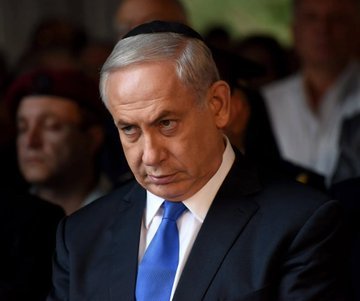
U.S. Secretary of State Marco Rubio issued a blunt reminder of the foundational nature of the U.S.-Israel alliance on Monday, March 30, 2026, stating that “there would be no Israeli Prime Minister Netanyahu without the United States.” Speaking during an exclusive interview with Al Jazeera, Rubio’s remarks highlight the immense leverage Washington continues to exert over the Israeli government as the conflict with Iran enters a critical, potentially final, phase.
The Context of “Strategic Dependency”
Rubio’s comments come at a time when the Israeli military is heavily reliant on U.S. logistics, intelligence, and munitions to sustain its multi-front engagement.
- The “Ironclad” Support: The Secretary noted that Israel’s security remains a top priority, but emphasized that this security is structurally tied to American “treasure and technology.”
- Leverage in Diplomacy: Analysts suggest the remark was a calculated signal to the Netanyahu government to align more closely with the “Islamabad Track” of peace negotiations. By reminding the Israeli leadership of their dependency, Rubio is subtly warning against unilateral escalations that could derail the fragile diplomatic opening with Tehran’s “Third Regime.”
- Military Integration: The arrival of hundreds of U.S. Navy SEALs and Army Rangers in the region over the weekend further underscores this integration, providing a “protective umbrella” that allows Israel to focus on its immediate borders while the U.S. manages the broader Iranian “infrastructure war.”
A Shift in Tone from Washington
Unlike the early days of the conflict, the Trump administration’s rhetoric has shifted toward a more transactional and assertive “America First” posture.
- Direct Pressure: Secretary Rubio’s statement follows reports of private friction between the White House and Jerusalem over the targeting of civilian infrastructure.
- The “Reasonable” Narrative: With President Trump describing the new Iranian leadership as “very reasonable,” Rubio’s comment serves to remind Netanyahu that the U.S. is the ultimate arbiter of when and how this war concludes.
- Financial Realities: As the U.S. economy faces pressure from $118/barrel oil and the Strait of Hormuz blockade, Washington is increasingly unwilling to provide a “blank check” for a prolonged regional war.
Domestic and Israeli Reactions
The Secretary’s words have sparked a firestorm of reaction:
- In Israel: Members of Netanyahu’s right-wing coalition, including Itamar Ben-Gvir, reportedly characterized the comment as “unacceptable interference” in Israeli sovereignty. However, opposition figures have noted that the 6,000+ wounded in Israel underscore the need for continued U.S. coordination.
- In the U.S.: The comment aligns with Trump’s broader rhetoric that “other countries must pay their fair share” and that U.S. support is not an “entitlement” but a strategic partnership.
| Key Figure | Recent Stance (Mar 30, 2026) |
| Sec. Marco Rubio | Emphasized Israeli dependency on U.S. support. |
| PM Netanyahu | Focused on “Total Victory” and nuclear prevention. |
| Pres. Donald Trump | Prioritizing a “Great Deal” via Pakistan/Diplomacy. |
| IRGC Command | Mocking U.S. influence over the “Chinese corridor.” |
The “Islamabad” End Game
The State Department confirmed that Rubio remains in close contact with Pakistani Foreign Minister Ishaq Dar. The “No Netanyahu without the U.S.” rhetoric is viewed as the “final push” to ensure Israel does not sabotage the 15-point peace proposal that would see the U.S. successfully extract 1,000 pounds of uranium and reopen the Strait of Hormuz to global trade.
