
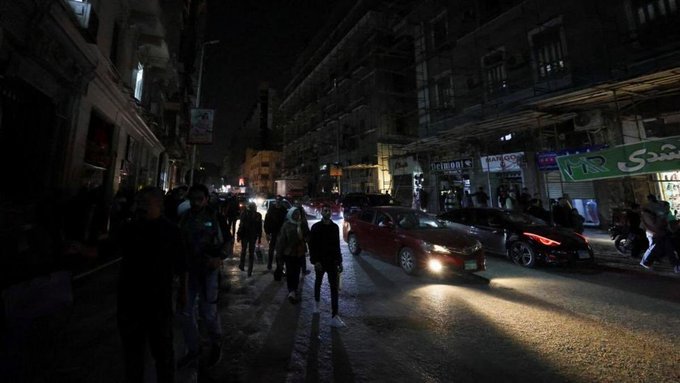
CAIRO — Egypt’s vibrant nightlife has been abruptly curtailed as the government implements a series of emergency energy-saving measures starting Saturday, March 28, 2026. Prime Minister Mostafa Madbouly announced that the month-long war in the Middle East has caused Egypt’s monthly energy bill to more than double—skyrocketing from $1.2 billion in January to $2.5 billion in March—forcing the state into a “war economy” mode to prevent a total collapse of the power grid.
The new mandates, which took effect this weekend, have transformed the landscape of Cairo and other major cities, turning off the bright billboards and storefronts that typically define the Egyptian evening.
The “9 PM Curfew” for Businesses
Under the new regulations, commercial establishments across the country must adhere to strict new operating hours to reduce national electricity consumption.
- Closing Times: Shops, shopping malls, restaurants, and cafes are required to close at 9:00 PM on weekdays.
- Weekend Exception: Establishments are granted a one-hour extension until 10:00 PM on Thursdays and Fridays.
- Exemptions: Essential services—including hospitals, pharmacies, bakeries, and grocery stores—remain exempt to ensure the continued supply of food and medicine.
- Penalties: Authorities have warned that violators face fines of up to 20,000 Egyptian pounds ($380) or the potential withdrawal of their commercial licenses.
“Operation Dark Streets”: Beyond Retail
The government’s plan extends beyond business hours, targeting public infrastructure and the administrative sector.
- Dimmed Public Lighting: Street lighting has been reduced to “minimum safe levels” (approximately a 50% reduction in some areas), and all roadside advertising boards must be switched off.
- Early Office Closures: Following the Eid Al-Fitr holiday, government offices will close daily at 6:00 PM, with remaining administrative tasks shifted to remote work.
- Project Slowdown: To conserve diesel and petrol, major national construction projects have been ordered to implement a total slowdown for the next two months.
- Remote Work Shift: The Cabinet is currently studying a proposal to mandate remote work for both public and private sector employees one or two days a week to further ease the load on the grid.
The “Energy Chokehold”: Why Now?
Egypt’s sudden energy crisis is a direct result of the U.S.-Israel-Iran conflict and the resulting maritime blockade.
- The Hormuz Effect: With the Strait of Hormuz closed, global crude prices have surged past $112 per barrel, far exceeding the $105 threshold used in Egypt’s budget planning.
- The Gas Deficit: Egypt depends on imports for roughly one-third of its natural gas supply. Israel’s suspension of flows from the Leviathan and Tamar fields at the start of the war has left Cairo struggling to secure expensive Liquefied Natural Gas (LNG) alternatives.
- Economic Strain: The surge in fuel costs has pushed Egypt’s monthly gas import bill from $560 million to $1.65 billion. Combined with a 61% decline in Suez Canal revenues, the government is facing a critical shortage of foreign currency.
Impact on Daily Life
| Sector | Measure | Status |
| Retail & Dining | Mandatory 9 PM / 10 PM closure. | Active |
| Street Lighting | 50% reduction; Ads switched off. | Active |
| Government | 6 PM closure; Remote work transition. | Starting April |
| Fuel Prices | 30% hike implemented earlier this month. | Active |
| Tourism | Exempt from early closure in “flagship” zones. | Active |
What’s Next?
Prime Minister Madbouly stressed that these measures are temporary for one month, with a review scheduled for late April. However, he warned that if the war continues or if oil prices climb toward the projected $150–$200 range, the government may be forced into “further levels of rationing,” including potential residential load-shedding.
