
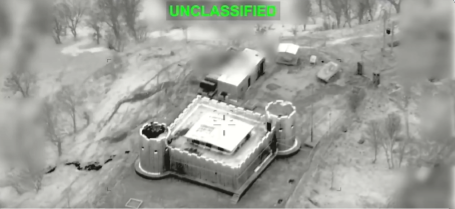
TAMPA / WASHINGTON — In a series of high-level briefings on Friday, March 27, 2026, U.S. Central Command (CENTCOM) and the Department of War declared that four weeks of Operation Epic Fury have systematically dismantled Iran’s ability to project military force beyond its borders. According to Secretary of War Pete Hegseth, the campaign has moved past simple attrition and into the “complete destruction” of Iran’s defense industrial base.
The assessment follows a wave of precision strikes over the last 48 hours that targeted the “heart of the IRGC,” including underground missile complexes and the highest levels of naval leadership.
The “92% Rule”: The Collapse of the IRGC Navy
CENTCOM Commander Admiral Brad Cooper revealed today that the Islamic Revolutionary Guard Corps Navy (IRGC-N) has effectively ceased to exist as a functional blue-water force.
- Fleet Decimation: CENTCOM confirms that 92% of Iran’s large naval vessels have been neutralized since February 28. Over 120 vessels across both the regular Navy (IRIN) and the IRGC-N have been destroyed or incapacitated.
- Loss of Leadership: On Thursday, March 26, an Israeli airstrike killed Admiral Alireza Tangsiri, the long-time commander of the IRGC-N. CENTCOM stated that with the loss of both its fleet and its leader, the IRGC-N is now on an “irreversible decline.”
- The “Mosquito” Shift: Unable to deploy large ships, Iran has been forced into pure asymmetric warfare, relying on “zombie” drones and small speedboats hidden along the jagged coastline to harass the Strait of Hormuz.
Targeting the “Future Threat”: Manufacturing & Infrastructure
While President Trump has paused strikes on civilian energy plants for 10 days, the military continues to strike “power projection” infrastructure—the factories and bunkers that build the weapons of tomorrow.
- Missile Industrial Base: Strikes on March 25 and 26 targeted the Yazd Missile Complex and the Imam Javad Underground Base. These facilities house the production lines for the Shahab-3 and other ballistic missiles used to strike Israel and Gulf partners.
- The “Northeastern Reach”: U.S. forces expanded their strike envelope to the 14th Artesh Tactical Airbase in Mashhad—the furthest northeast the coalition has struck since the war began—targeting long-range drone storage.
- Ammunition Bunkers: Satellite imagery from Bandar Abbas shows massive secondary explosions following strikes on the 9th Artesh Airbase, indicating the destruction of significant stockpiles of one-way attack drones.
CENTCOM’s “Desperation” Assessment
Admiral Cooper noted that the recent surge in Iranian attacks on civilian hotels and commercial ports (like today’s strike on Kuwait’s Shuwaikh Port) is a sign of “military desperation.”
| Capability | Current Status (March 27, 2026) |
| Naval Projection | Non-functional; No large hulls remain operational in the Gulf. |
| Air Defense | Degraded; Coalition maintains air dominance over 70% of Iranian territory. |
| Drone Production | Compromised; High-intensity strikes on “manufacturing nodes” have slowed replenishment. |
| Command & Control | Fragmented; Killing of top commanders has forced units to operate autonomously. |
What’s Next?
As the April 6 deadline approaches, the U.S. is using this “10-day pause” on civilian infrastructure to consolidate its gains and resupply its Tomahawk stocks. The military’s goal is to ensure that if the 15-point peace proposal is rejected, the IRGC will have no conventional military means left to resist a total air and sea blockade of the Iranian coast.
