
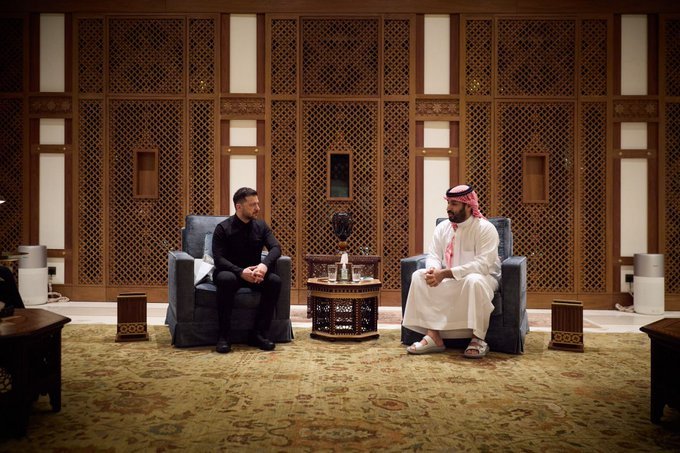
RIYADH / JEDDAH — In a historic shift in Middle Eastern security dynamics, Ukrainian President Volodymyr Zelenskyy and the Saudi Ministry of Defense signed a comprehensive defense cooperation agreement on Friday, March 27, 2026. The pact, finalized during Zelenskyy’s surprise visit to the Kingdom, establishes a formal framework for technological collaboration, joint investments, and weapons contracts, effectively making Ukraine a key security partner for the Gulf.
The agreement comes as Saudi Arabia and its neighbors face an unprecedented surge in drone and missile attacks linked to the ongoing war in Iran.
The “Drone Swap” Strategy
The core of the agreement is a mutually beneficial exchange of hardware and battlefield expertise, born from the shared experience of facing Iranian-designed weaponry.
- Ukraine’s Contribution: Kyiv is sharing its “world-class” expertise in intercepting Shahed-style drones. This includes AI-assisted target recognition, electronic jamming tools, and the use of low-cost drone interceptors that have been perfected over four years of war with Russia.
- The “228” Experts: Zelenskyy confirmed that over 200 Ukrainian military experts are already on the ground in the Gulf—including Saudi Arabia, the UAE, and Qatar—assisting local forces in hardening their air defenses.
- Saudi Arabia’s Contribution: In exchange for drone tech, Ukraine is seeking access to Saudi Arabia’s stockpiles of interceptor missiles (such as the Patriot system) to help defend Ukrainian cities against Russian ballistic strikes.
A “Security Donor” Role for Kyiv
During his meeting with Crown Prince Mohammed bin Salman (MBS), Zelenskyy emphasized that Ukraine is no longer just a recipient of aid but an international “security donor.”
- Shared Enemy: Zelenskyy noted that for five years, Ukrainians have fought the “same terrorist attacks” currently being launched in the Gulf. “Saudi Arabia has capabilities that are of interest to Ukraine, and this cooperation can be mutually beneficial,” he stated.
- Technological Integration: The deal isn’t just about buying missiles; it focuses on building a system—integrating Ukrainian software and battle-hardened data analysis with Saudi Arabia’s conventional military hardware.
- Investment in Reconstruction: Beyond immediate defense, the pact lays the groundwork for Saudi investment in Ukraine’s domestic arms industry, which has become a “drone superpower” capable of rapid-cycle engineering in basement workshops.
The Geopolitical Ripple Effect
The deal is being viewed as a significant diplomatic victory for Kyiv at a time when U.S. military resources are being stretched thin by the conflict in Iran.
| Strategic Impact | Detail |
| Bypassing the U.S. Bottleneck | As Washington considers diverting weapons to the Middle East, Ukraine is securing its own direct partnerships with wealthy Gulf donors. |
| Russia-Iran Axis | The pact serves as a counter to the growing military alliance between Moscow and Tehran, which has seen Russia providing air defense to Iran in exchange for drones. |
| Regional Stability | The agreement includes discussions on fuel markets and energy cooperation, as Saudi Arabia seeks to stabilize prices amidst the closure of the Strait of Hormuz. |
What’s Next?
Following the signing in Jeddah, Zelenskyy is expected to visit other regional capitals to expand this “Middle East Drone Coalition.” The focus now shifts to whether the U.S. State Department will approve the “missile swap” components of the deal, which involve American-made technology. Meanwhile, the first joint Saudi-Ukrainian technical center for uncrewed systems is reportedly already under construction in western Saudi Arabia.
