
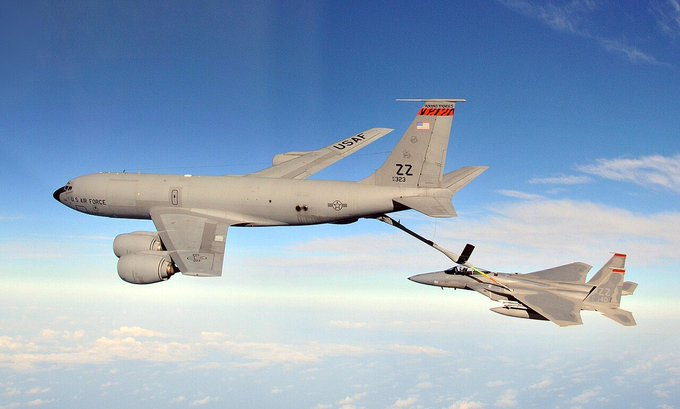
TEL AVIV — A U.S. Air Force KC-135R Stratotanker (Registration: 63-8018) was forced to make an emergency landing at Ben Gurion International Airport on Sunday, March 29, 2026, after declaring an in-flight emergency over Jordan. The aircraft, returning from an active refueling mission over Iraq, squawked the international emergency code “7700” before breaking formation to prioritize safety.
The incident occurs on Day 30 of the conflict, as Ben Gurion Airport increasingly takes on the appearance of a “forward military base” rather than a civilian hub.
The Diversion Profile
Flight-tracking data confirmed the aircraft was operating as part of the massive aerial refueling bridge supporting Operation Epic Fury strikes in Iraq and Iran.
- The Incident: While transiting Jordanian airspace, the crew reported a “technical malfunction”—later identified by Israeli media as a hydraulic failure—that necessitated an immediate landing at the nearest high-capacity facility.
- The Landing: The Stratotanker touched down safely in Tel Aviv at approximately 12:30 PM (Local Time). Ground crews and emergency vehicles were on standby, though no fire or injuries were reported upon arrival.
- Mission Impact: The aircraft was forced to abandon its position in a refueling track, requiring other tankers in the theater to compensate for the lost fuel offload capacity for returning strike packages.
Pattern of Attrition: The Second Tanker Incident
This emergency landing marks the second major incident involving the U.S. refueling fleet in just over two weeks, highlighting the extreme operational strain on these 60-year-old airframes.
- The March 12 Crash: On March 12, a different KC-135 crashed in western Iraq, resulting in the deaths of all six crew members. That incident was attributed to a mid-air collision or catastrophic mechanical failure during “friendly skies” operations.
- The “Beale” Connection: Like the aircraft involved in the March 12 tragedy, today’s diverted tanker is reportedly part of the rotation from Beale Air Force Base, emphasizing the heavy reliance on specific U.S.-based wings for the current conflict.
- Refueling Stress: With over 30 tankers now based in the region, the high sortie rate is leading to what analysts call “accelerated airframe fatigue.”
Ben Gurion: A “Wartime Terminal”
The sight of a damaged or emergency U.S. tanker on the tarmac has become a stark symbol of the airport’s transformation.
- Military Dominance: Travelers at Ben Gurion today described the atmosphere as “eerie,” with military aircraft now outnumbering civilian airliners.
- Capacity Caps: The Israeli Ministry of Transport has restricted Ben Gurion to just one departing flight per hour, with a maximum of 50 passengers per flight, as the facility prioritizes military logistics and emergency landings like today’s KC-135.
- The “Military Base” Feel: One traveler told The Media Line that “the airport looks more like a military base than a civil airport… it’s shocking and frightening.”
Current U.S. Tanker Status (March 29, 2026)
| Event | Aircraft Type | Status |
| Today’s Emergency | KC-135R (63-8018) | Landed safely at Ben Gurion; undergoing repairs. |
| March 27 Strike | KC-135 Stratotanker | Incinerated at Prince Sultan Air Base (Saudi Arabia). |
| March 12 Crash | KC-135 Stratotanker | Total Loss in Western Iraq; 6 KIA. |
| Total Fleet | 30+ Tankers | Rotations active from Beale and McConnell AFBs. |
What’s Next?
The frequency of these “technical” emergencies is likely to increase as the U.S. prepares for a potential ground phase in April. With tanker support being the “oxygen” of the air campaign, any further attrition to the Stratotanker fleet could force the Pentagon to pull more aircraft from the Pacific or European theaters—or rely more heavily on the newer, but still limited, KC-46 Pegasus.
