
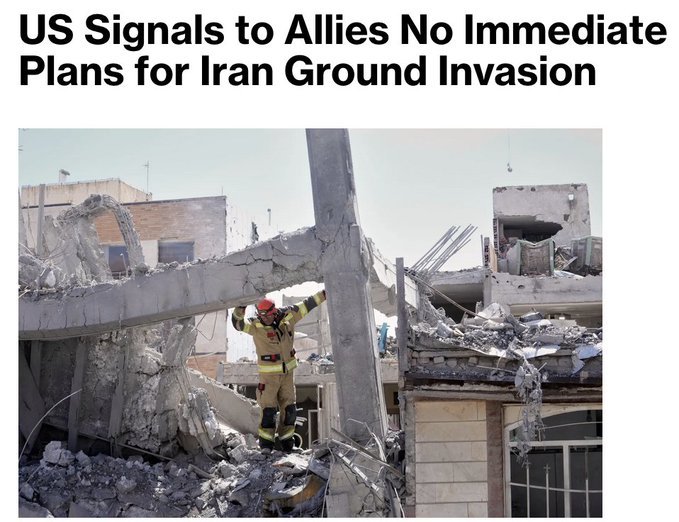
WASHINGTON — The Pentagon has clarified its massive military buildup in the Middle East, with officials telling Bloomberg on Friday, March 27, 2026, that while a ground invasion of Iran is “not currently being planned,” thousands of additional troops are being deployed to provide “maximum flexibility” for President Trump. The influx of personnel—including elite units from the 82nd Airborne Division—is officially categorized as a mission for deterrence, regional stability, and the potential evacuation of the hundreds of thousands of U.S. and allied citizens currently in the line of fire.
Despite the “non-invasion” label, military analysts note that the scale of the deployment is the largest since the 2003 Iraq War, creating a “ready-to-act” force should the Islamabad Channel negotiations collapse.
The Three-Pillar Mission
Department of Defense officials emphasized that the current surge is designed to manage the “unpredictable” nature of the 28-day-old conflict.
- 1. Active Deterrence: The presence of additional combat brigades is intended to dissuade the IRGC from following through on its threats to strike regional desalination plants and “American-occupied hotels.”
- 2. NEO (Non-combatant Evacuation Operations): With over 200,000 Americans in the Gulf and Israel, the Pentagon is positioning specialized units to conduct mass evacuations if the air war transitions into a broader regional meltdown.
- 3. Strategic “Flexibility”: Officials stressed that “all options remain on the table.” While no “Invasion Day” is set, the infrastructure is being laid to shift from a defensive posture to an offensive ground operation “within hours” if the April 6 deadline passes without an agreement.
The “82nd Airborne” Surge
Reports from the USS Abraham Lincoln strike group and regional hubs indicate that the “tip of the spear” is already in theater.
- Rapid Deployment: Elements of the 82nd Airborne began arriving at undisclosed locations in the Gulf earlier this week. They are being supported by additional amphibious assault ships and Marine Expeditionary Units (MEUs) nearing the Iranian coast.
- The “Tripwire” Effect: Critics in Congress have warned that placing thousands of troops in urban centers and “civilian hotels” (to avoid degraded bases) effectively turns American soldiers into “human tripwires” for Iranian retaliation.
- Hegseth’s Stance: Defense Secretary Pete Hegseth stated today that the U.S. will not be “paralyzed by fear of escalation,” asserting that the current force posture is what “peace through strength” looks like in the 21st century.
Timeline of the “10-Day Window”
The U.S. troop movement is synchronized with the diplomatic clock currently ticking in Pakistan.
| Date | Military/Diplomatic Milestone |
| March 27 (Today) | Islamabad Response Due: U.S. expects Iran’s formal counter-proposal to the 15-point deal. |
| March 28-April 5 | The “Energy Pause”: U.S. holds off on striking Iranian power plants to allow for diplomacy. |
| April 6 (Deadline) | 8:00 P.M. ET: The ultimatum expires. Failure to reach a deal may trigger “Phase 3” infrastructure strikes. |
What’s Next?
As the Islamabad Response arrives later tonight, the Pentagon will assess whether the Iranian counter-offer warrants a further pause or a “pivot to kinetic operations.” If Tehran remains defiant regarding the Strait of Hormuz or its nuclear program, the “deterrence” forces currently landing in the Gulf may find their mission description changing very quickly.
