
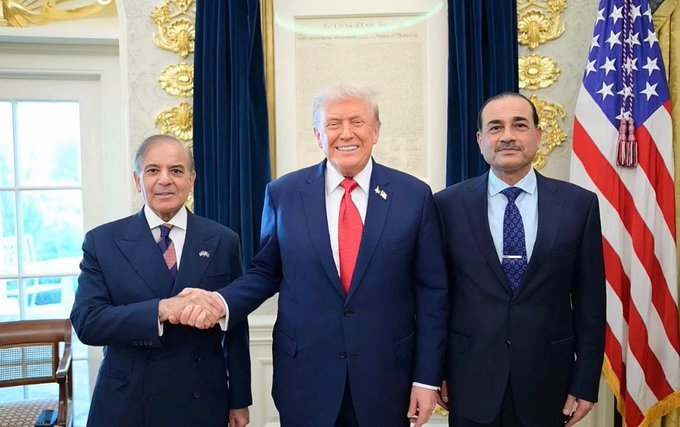
ISLAMABAD / WASHINGTON — Pakistan has positioned itself as the central diplomatic “bridge” in the month-long war between the U.S., Israel, and Iran, according to a series of reports from the Wall Street Journal and regional officials on Sunday, March 29, 2026. By leveraging its unique status as a nuclear-armed state with deep ties to both the Trump administration and the Iranian leadership, Islamabad is attempting to broker an “off-ramp” to prevent a full-scale ground invasion of Iran.
The WSJ characterizes Pakistan’s strategy as a “high-stakes double game,” where it maintains “essential” military relevance to Washington while remaining “untouchable” by Tehran.
The “Munir-Trump” Connection
A key pillar of Pakistan’s mediating success is the reported personal rapport between Pakistan’s military chief, Field Marshal Asim Munir, and President Donald Trump.
- The Direct Line: Munir reportedly has the “President’s ear,” having spoken with Trump as recently as Sunday—around the same time the U.S. announced a temporary five-day pause on strikes against Iranian energy infrastructure.
- Geopolitical Relevance: By positioning himself as a “back-channel bridge,” Munir has made Pakistan indispensable to the U.S. “Peace Plan” while ensuring that Pakistan’s own borders and embassy in Tehran remain (largely) respected despite the regional chaos.
The 15-Point “Islamabad Framework”
Pakistan has become the physical conduit for the most substantive peace proposal of the war thus far.
- The U.S. Proposal: U.S. Envoy Steve Witkoff confirmed that a 15-point action list was delivered to Tehran via Pakistani intermediaries.
- Key Demands: Dismantling nuclear sites (Natanz, Fordow), halting uranium enrichment, and fully reopening the Strait of Hormuz.
- The Iranian Counter: Through Pakistan, Tehran responded with five core conditions, including war reparations, a guarantee against future attacks, and specific “rights” over the Strait of Hormuz.
- The Venue: Prime Minister Shehbaz Sharif has officially offered Islamabad as the host city for face-to-face (or “shuttle”) negotiations, which could involve Vice President JD Vance and Iranian Parliament Speaker Mohammad Bagher Ghalibaf.
Why Pakistan is “Untouchable”
While other traditional mediators like Oman and Qatar have come under fire or seen their influence wane during the kinetic phase of the war, Pakistan has remained resilient for several strategic reasons:
- Nuclear Deterrence: As the only Muslim-majority nuclear power, Pakistan’s stability is a “red line” for both the West and the Islamic world.
- Shared Border: Pakistan shares a long, porous border with Iran. Any direct Iranian strike on Pakistan would risk opening a “second front” that Tehran cannot afford while fighting Israel and the U.S.
- The “Shia” Factor: Home to the world’s second-largest Shia population, Pakistan possesses a cultural and religious “soft power” that allows its diplomats to interface with the IRGC in ways Western-aligned Arab states cannot.
The “Saudi” Pressure: A Fragile Balance
Despite its “peacemaker” role, Pakistan is under immense pressure from its partners in Riyadh.
| Factor | Description | Risk Level |
| Defense Pact | Pakistan signed a mutual defense agreement with Saudi Arabia in 2025. | High (Could force Pakistan into the war if KSA is hit). |
| Economic Aid | Saudi Arabia provides critical financial “heft” to Pakistan’s economy. | High |
| Shuttle Diplomacy | Foreign Ministers of Turkey, Egypt, and Saudi Arabia are meeting in Islamabad today. | Medium |
What’s Next?
The “Islamabad Summit” (scheduled for March 29–30) will be the ultimate test of Pakistan’s “high-wire” act. If the foreign ministers can bridge the gap between the U.S. 15-point plan and Iran’s 5-point counter-proposal before the April 6 deadline, Pakistan may secure its most significant diplomatic victory in decades. If not, the “smokescreen” of negotiations may give way to the ground operations the Pentagon is currently preparing.
