
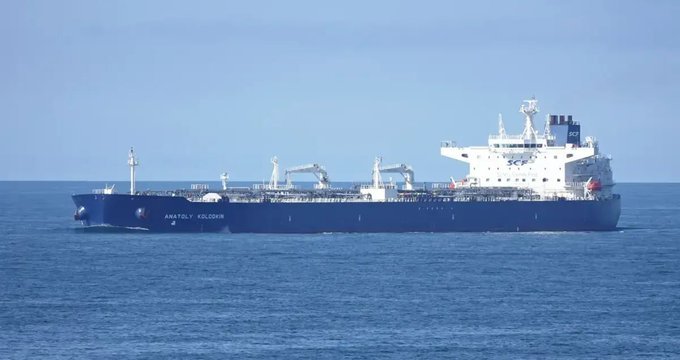
In a significant shift in U.S. enforcement policy, the Russian-flagged tanker Anatoly Kolodkin arrived at the Cuban port of Matanzas on Monday, March 30, 2026. Carrying roughly 100,000 tons (730,000 barrels) of crude oil, the vessel successfully challenged a de facto American fuel blockade that had left the island without a major oil shipment for over three months.
The Trump U-Turn: “I Have No Problem”
The arrival of the sanctioned vessel marks a sudden recalibration of Washington’s “Maximum Pressure” campaign against the Cuban government.
- The Presidential Directive: Speaking from Air Force One, President Donald Trump signaled he would not enforce the blockade against this specific shipment. “If a country wants to send some oil into Cuba right now, I have no problem with that, whether it’s Russia or not,” Trump stated, noting that the Cuban people “have to survive.”
- Coast Guard Stand-Down: Despite having cutters in the region, the U.S. Coast Guard did not attempt to intercept or divert the tanker. Analysts suggest the administration is wary of opening a “second maritime front” with Russia while the U.S. Navy is heavily committed to the Strait of Hormuz and the war with Iran.
- Humanitarian Framing: The Russian Ministry of Transport characterized the cargo as “humanitarian aid,” a label that provided a diplomatic opening for Washington to ease the blockade without officially lifting sanctions.
The Russian Navy Escort
The tanker’s journey from the port of Primorsk was marked by high-level military protection.
- The Atlantic Transit: The vessel was escorted through the English Channel by the Russian Navy corvette Soobrazitelny, a Steregushchiy-class warship armed with “Kalibr” cruise missiles.
- NATO Monitoring: The British Royal Navy (HMS Mersey) monitored the pair through European waters before the Soobrazitelny turned back, leaving the tanker to cross the Atlantic alone—albeit under the watchful eye of U.S. Southern Command.
Impact on the Cuban Energy Crisis
For the 10 million residents of Cuba, the arrival of the Anatoly Kolodkin offers a temporary reprieve from a “zero hour” energy collapse.
- Ending the Drought: Cuba has not received a large-scale oil import since January, following the capture of Venezuelan leader Nicolás Maduro by U.S. forces, which severed the island’s primary energy lifeline.
- Diesel for the Grid: Experts estimate the crude can be refined into enough diesel to power the island’s backup generators and transportation for approximately 12 to 15 days.
- Health and Safety: Cuban health officials had recently warned that the fuel-induced blackouts were increasing mortality risks for hospital patients, particularly those in cancer wards.
| Vessel Name | Cargo Type | Origin | Status |
| Anatoly Kolodkin | 100,000 tons Crude | Primorsk, Russia | Arrived (Matanzas) |
| Sea Horse | 200,000 barrels Diesel | Hong Kong / Russia | Diverted to Venezuela |
| Ocean Mariner | Mixed Fuel | Mexico (Jan 2026) | Last delivery before blockade. |
The “Global Oil Flow” Factor
The decision to allow the Russian shipment coincides with a broader U.S. Treasury move to temporarily ease some sanctions on Russian oil. This “strategic flexibility” is intended to stabilize global energy markets, which have been rocked by $118-per-barrel prices following U.S.-Israeli strikes on Iranian oil infrastructure. While Secretary of State Marco Rubio maintained that the U.S. still seeks “systemic change” in Havana, the pragmatic need to avoid a humanitarian catastrophe—and a direct naval clash with Russia—appears to have taken priority.
