
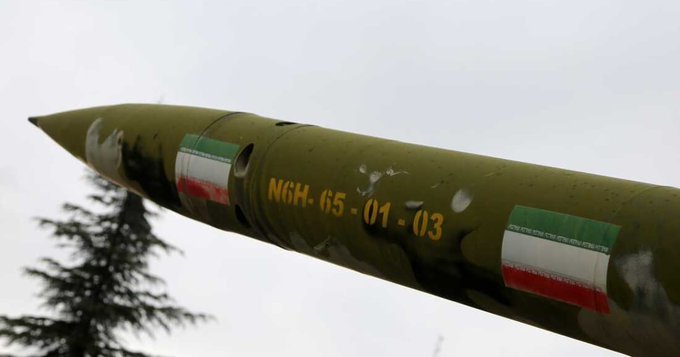
WASHINGTON — In a sobering assessment of the 29-day-old conflict, five sources familiar with U.S. intelligence told Reuters on Friday, March 27, 2026, that the United States can only verify the certain destruction of roughly one-third of Iran’s ballistic missile stockpile.
The report highlights a significant gap between the Trump administration’s public rhetoric and the classified reality of “Operation Epic Fury,” as the coalition struggles to penetrate Iran’s vast network of “missile cities” and underground bunkers.
The “Rule of Thirds” Assessment
U.S. intelligence officials have divided the status of Iran’s pre-war arsenal into three distinct categories:
| Category | Status | Intelligence Confidence |
| Confirmed Destroyed | ~33% | High: Satellite and ground-based verification of strike sites. |
| Inaccessible/Damaged | ~33% | Medium: Missiles likely buried or damaged in collapsed tunnels/bunkers. |
| Operational/Active | ~34% | Low: Stockpiles remaining in deep underground “missile cities” or mobile units. |
The Challenges of “Missile Cities”
One senior U.S. official noted that the primary obstacle is Iran’s extensive use of deep-subsurface storage.
- The Bunker Problem: While heavy munitions have collapsed tunnel entrances, intelligence cannot confirm if the missiles inside are destroyed or simply “trapped” and potentially recoverable after the fighting stops.
- Mobile Launchers: While Israeli sources claim to have neutralized 70% of Iran’s launch capacity (roughly 330 out of 470 launchers), the missiles themselves remain hidden in a “shell game” across the country’s rugged terrain.
Contradicting the White House Narrative
The intelligence assessment stands in stark contrast to recent public statements from the executive branch:
- The President’s Claim: On Thursday, President Trump told reporters that Iran has “very few rockets left.” However, he later acknowledged the risk in a televised Cabinet meeting, stating that even a “1% survival rate” is unacceptable if a single missile can hit a billion-dollar ship in the Strait of Hormuz.
- Marco Rubio’s Timeline: Secretary of State Marco Rubio maintains the operation is “ahead of schedule” and will conclude in weeks, citing a 90% drop in Iranian missile and drone launch rates since the start of the war.
A Souring “War of Attrition”?
The difficulty in confirming the destruction of the Iranian arsenal has raised concerns about the U.S. military’s own supply chain:
- Tomahawk Burn Rate: Reports from The Washington Post suggest the Pentagon is “alarmed” by the consumption of its own precision munitions. The U.S. has fired over 850 Tomahawk missiles in four weeks—a rate that is prompting internal discussions on how to sustain a long-term campaign.
- Industrial Targets: To compensate for the hidden stockpiles, the coalition has shifted focus to production facilities. CENTCOM reports that over two-thirds of Iran’s missile and drone factories have been damaged or eliminated.
The Regional “Ring of Fire”
Despite the reported 90% drop in fire rates, Iran has demonstrated it still has “teeth.”
- Diego Garcia: The recent strike near the joint US-UK base proved Iran still possesses long-range capabilities previously underestimated by the West.
- Houthi Entry: This morning’s Houthi missile launch at southern Israel further confirms that the “Axis of Resistance” is utilizing its remaining stockpiles in a coordinated, multi-front effort.
