

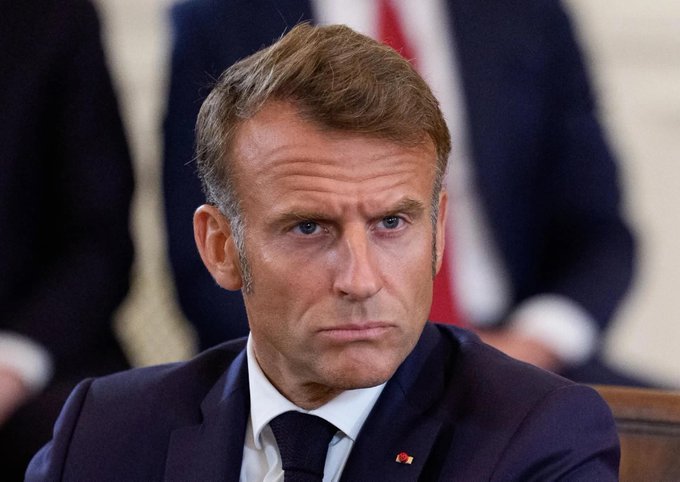
President Donald Trump intensified his criticism of European allies on Tuesday, March 31, 2026, confirming that France has blocked U.S. military transport aircraft carrying supplies to Israel from using French airspace.
The move by Paris marks a significant escalation in the diplomatic rift between the White House and the European Union over the ongoing U.S.-led offensive against Iran, following a similar denial of landing rights by Italy earlier today.
The Airspace Embargo
During an afternoon address at the White House, the President characterized the French decision as a “betrayal of the mission” to stabilize the Middle East.
- The Direct Quote: “France just blocked our planes. Loaded with supplies, very important supplies for Israel, and they said ‘no’ to the flyover,” Trump told reporters. “It’s not helpful. We’re out there doing the heavy lifting, and they’re playing games with maps.”
- Logistical Detours: U.S. Air Force transport wings—specifically those flying out of the East Coast and Germany—are now reportedly being forced to take “long-way” routes over the Atlantic and through the Strait of Gibraltar, adding hours to critical delivery timelines.
- The “Sigonella” Connection: The French move follows reports from Corriere della Sera that Italy denied U.S. bombers permission to land at the Sigonella base in Sicily. Trump’s remarks suggest a coordinated “sovereignty” push by EU powers to distance themselves from the kinetic phase of the war.
The “Special Relationship” vs. The “European Bloc”
The President used the announcement to further contrast the “courage” he expects from allies with the current actions of France and Italy.
- Macro-Diplomatic Pressure: Analysts suggest the French move is a response to Article 11 of the Italian Constitution and similar European legal frameworks that prohibit participation in “wars of aggression.”
- The UK Contrast: The President’s frustration with France follows his earlier “ultimatum” to the United Kingdom, where he urged London to “build up some delayed courage” and take control of the Strait of Hormuz independently.
- Sanctions Warning: While not explicit, the President hinted at “economic consequences” for nations that obstruct U.S. military logistics, reinforcing his “America First” stance on defense treaties.
Strategic Impact on Israel’s Defense
The French airspace ban comes at a critical time for the Israeli Air Force (IAF), which is currently managing high-intensity sorties over Iran and Lebanon.
- Resupply Urgency: The blocked flights were reportedly carrying precision-guided munitions (PGMs) and interceptors for the Iron Dome and David’s Sling systems, which have seen heavy use against Iranian-backed drone swarms.
- Alternative Routes: The U.S. is reportedly negotiating with Greece and Cyprus to ensure “unimpeded” corridors to the Eastern Mediterranean, though these routes are increasingly congested.
| Conflict Metric | Status (March 31, 2026) |
| Airspace Denials | France (Flyover), Spain (Flyover), Italy (Landing) |
| U.S. Response | Diplomatic Condemnation; Logistical Rerouting |
| Primary Impact | Increased flight time for Israel-bound munitions |
| French Rationale | Non-compliance with “logistical” treaty definitions |
| Market Reaction | Brent Crude spikes to $128/bbl on allied tension |
The “April 6” Clock is Ticking
With the April 6 deadline for a regional peace deal less than a week away, the fracturing of the Western alliance presents a challenge for the “Islamabad Track” negotiations. While the U.S. maintains total air superiority over Iran, the “logistical blockade” by European allies provides Tehran with a psychological victory, suggesting that the “Maximum Pressure” campaign does not have the unanimous support of NATO.
