
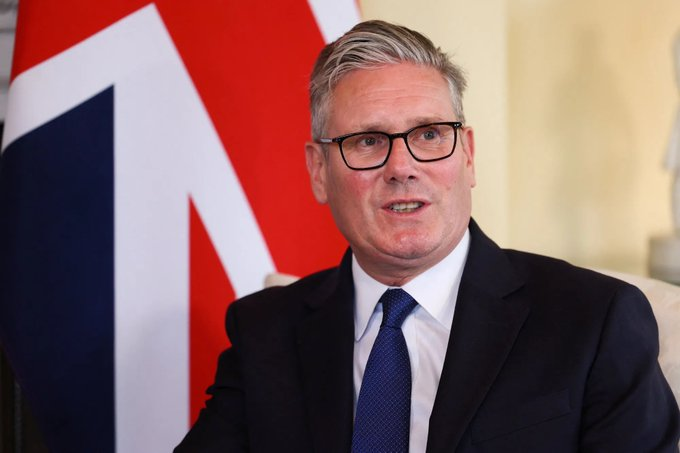
LONDON / HELSINKI — In a definitive statement that highlights a widening rift in the transatlantic alliance, British Prime Minister Keir Starmer reiterated on Friday, March 27, 2026, that the United Kingdom will not join the U.S.-led offensive against Iran. Speaking to Sky News during a visit to the Joint Expeditionary Force (JEF) meeting in Finland, Starmer cited a “clear difference” in opinion between London and Washington, insisting that his government will prioritize a “calm, level-headed assessment of the British national interest” over calls for military escalation.
The Prime Minister’s remarks come amid mounting pressure from President Trump, who has publicly criticized the UK for its “limited” response and its initial refusal to grant the U.S. military access to British bases for the February 28 strikes.
The “Iraq Lessons” Doctrine
Starmer’s refusal to participate in offensive operations is rooted in a specific desire to avoid the “mistakes of 2003.”
- Principled Opposition: Starmer has consistently stated that while the UK will support “defensive” actions—such as shooting down Iranian drones targeting allies—it will not participate in strikes inside Iran. “I have been clear I’m not going to join the war,” he said today.
- The Base Compromise: After initially denying a request to use RAF Fairford and Diego Garcia for the B-2 bomber strikes, Starmer later permitted access strictly for “specific and limited defensive purposes” to protect British personnel and Gulf partners from retaliatory Iranian missiles.
- Defensive Focus: The UK currently has Typhoon and F-35 jets operating from Cyprus and Qatar, but their mission is restricted to intercepting incoming threats over Jordan, Iraq, and the Gulf.
Naval Strains and “Toy” Carriers
The UK’s non-involvement is also seen as a pragmatic admission of the Royal Navy’s current limitations, which have become a point of friction with the Trump administration.
- The “Toy” Insult: On Thursday, President Trump reportedly dismissed Britain’s two aircraft carriers, HMS Queen Elizabeth and HMS Prince of Wales, as “toys” that are currently “stuck in dock” while the U.S. Navy carries the burden in the Gulf.
- Resource Depletion: The Royal Navy’s presence is currently limited to a single Type 45 destroyer, HMS Dragon, which only recently arrived in the Eastern Mediterranean.
- NATO Reshuffle: Because of the Iran crisis, Germany has been forced to assume command of a NATO maritime mission in the North Atlantic that was originally assigned to the UK, an “embarrassment” that analysts say underscores years of underinvestment in the British fleet.
A Transatlantic Divide
Starmer’s stance aligns the UK more closely with other European allies like Germany, Spain, and France, all of whom have expressed “deep unease” with Washington’s military posture.
| Country | Stance on Offensive Action |
| United States | Operation Epic Fury: Total military degradation; April 6 ultimatum. |
| United Kingdom | Defensive Only: Intercepting drones; protecting 200,000+ British citizens in the region. |
| Germany | “Patient Diplomacy”: Refusing direct transit talks; focusing on G7 coordination. |
| Spain | “Predictability” over “Impulse”: Denied base access; warns against “impulsive” escalations. |
What’s Next?
As the 10-day “Energy Pause” continues, Starmer is focusing on the “Islamabad Channel” for a negotiated settlement. While he refuses to join the bombing, he has pledged to help Gulf partners by bringing in Ukrainian experts to assist in shooting down Iranian drones. The Prime Minister is expected to return to London tomorrow to convene a fourth COBRA meeting to assess the economic fallout and the potential for a ground war that he has vowed Britain will not be a part of.
