
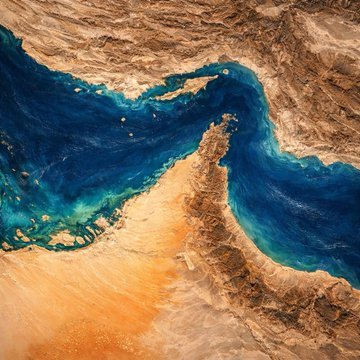
TEHRAN — In a defiant move on March 27, 2026, the IRGC Navy officially declared the Strait of Hormuz “closed” to any vessel associated with the United States, Israel, or their allies. The statement, issued by the Khatam al-Anbiya Central Headquarters, dismissed recent claims by U.S. President Donald Trump that the waterway had been reopened, warning that any unauthorized movement would be met with a “harsh and decisive response.”
The “Managed Corridor” Protocol
Despite the declaration of a total blockade, Iran has begun implementing a highly selective “Controlled Passage System.” Rather than a blanket closure, Tehran is using its geographic advantage to “shape” maritime traffic:
- The Larak Corridor: Approved vessels are being funneled through a narrow lane north of Larak Island, hugging the Iranian coast for visual and radio verification.
- The “Whitelist”: Iran has explicitly granted safe passage to specific partners. This week, an agreement was reached to allow 20 Pakistani-flagged ships to transit at a rate of two per day. Chinese-owned vessels have also been given “green-light” status, though even they have faced “turn-back” orders if their documentation is deemed insufficient.
- The Identification Gamble: In a desperate bid to avoid attack, non-Chinese ships (such as the Liberian-flagged SinoOcean) have begun broadcasting AIS signals like “CHINA OWNER / ALL CREW” to trick Iranian sensors.
Military Reality vs. Rhetorical Claims
The claim of “full control” comes at a high cost. Western intelligence suggests that the conventional Iranian Navy has suffered significant losses, including the sinking of the frigate IRIS Dena by a U.S. submarine earlier this month. Furthermore, the IDF confirmed the assassination of IRGC Navy Commander Rear Admiral Alireza Tangsiri in Bandar Abbas on March 26.
However, analysts note that Iran does not need a “blue-water” navy to control the Strait. By utilizing:
- Shore-based Anti-Ship Missiles: Hidden in coastal fortifications.
- Explosive Unmanned Surface Vessels (USVs): Low-cost “suicide boats” that are difficult to intercept.
- GNSS Jamming: Scrambling GPS signals to make civilian navigation nearly impossible.
The Global Economic Fallout
The “functional closure” of the Strait has paralyzed the Gulf economies. With approximately 60% of regional oil exports halted, the impact is being felt globally:
- Force Majeure: Major producers including Qatar (QatarEnergy), Kuwait (KPC), and Iraq have declared force majeure, unable to fulfill international contracts.
- Oil Prices: Benchmark Brent crude has surged past $110 per barrel, up from $70 before the conflict began in late February.
- Alternative Routes: Saudi Arabia has pivoted to its East-West pipeline to the Red Sea, though that route is now under threat from Houthi rebels in Yemen.
International Response: The “Hormuz Security Force”
In response to Iran’s “economic terrorism,” the United Arab Emirates is reportedly leading a diplomatic push in Washington to form a “Hormuz Security Force.” The goal is to create a multi-national naval convoy system to challenge Iran’s “managed corridor” and restore freedom of navigation under international law (UNCLOS).
“When Iran holds Hormuz hostage, every nation pays the ransom,” stated Sultan Ahmed Al Jaber, head of ADNOC, following meetings with U.S. officials.
| Status of Key Shipping Groups | Action Taken |
| Maersk / Hapag-Lloyd | All transits suspended; rerouting via Cape of Good Hope. |
| Chinese State Shipping | Continued transit via “Larak Corridor” with IRGC escort. |
| Indian Energy Tankers | Selective transit under Indian Navy “Operation Urja Suraksha.” |
| Regional Feeders | Limited to Oman-based hubs (Salalah/Duqm). |
