
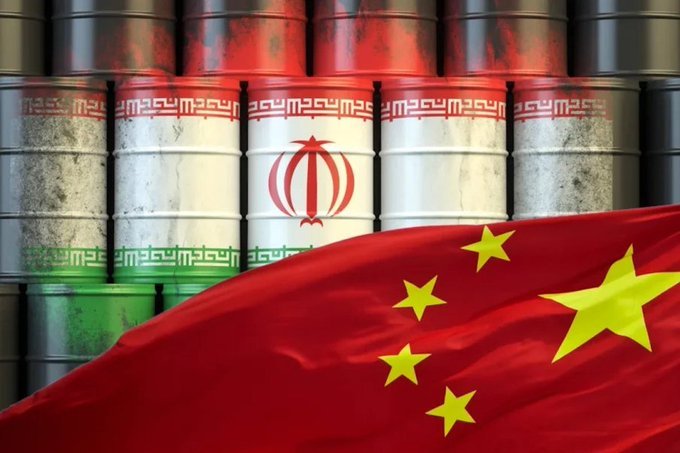
Despite being the primary target of the U.S.-Israeli “Epic Fury” campaign, Iran has successfully leveraged its control over the Strait of Hormuz to nearly double its daily oil revenues. As of March 30, 2026, market data from Goldman Sachs and TankerTrackers.com indicate that Tehran is generating an estimated $139 million per day, a sharp increase from the $70–$80 million daily average seen in early 2025.
Selective Blockade: The “Sole Exporter” Advantage
The revenue surge is driven by a unique geopolitical paradox: while Iran has effectively closed the Strait of Hormuz to 95% of global traffic, it has maintained a “selective artery” for its own tankers.
- Export Volume: Contrary to reports of a total shutdown, Iranian crude exports have stayed resilient at approximately 1.6 to 2.2 million barrels per day (bpd). This is a significant jump from the 1.1 million bpd average recorded during the “Maximum Pressure” era of 2023-2024.
- The Price Premium: Global supply disruptions have sent Brent Crude soaring to $118–$120 per barrel.
- Narrowing Discounts: Previously, Iran was forced to offer $10–$12 discounts to attract buyers. Due to the extreme scarcity of Middle Eastern oil, that discount has narrowed to just $2.10 per barrel, allowing Tehran to capture prices closer to the global benchmark than ever before.
China: The 91% Customer
Tehran’s economic survival remains almost entirely dependent on its partnership with Beijing, which has “doubled down” on the relationship as other buyers flee.
- The Lion’s Share: Recent trade data confirms that 90.8% of Iran’s oil exports are currently heading to China.
- Strategic Stockpiling: Chinese “teapot” refiners have reportedly absorbed over 12 million barrels of Iranian crude since the war began on February 28, viewing the discounted Iranian “Light” blend as a critical hedge against global price spikes.
- Sanctions Easing: In a move to stabilize the global economy, the U.S. Treasury has temporarily eased enforcement on some Iranian tankers already at sea, a pragmatic “blind eye” that has inadvertently funneled billions into Tehran’s war chest.
New Revenue Stream: The “Hormuz Transit Fee”
Beyond direct oil sales, Iran has introduced a controversial new maritime levy to capitalize on the crisis.
- The “Tax”: Commercial vessels permitted to transit the Strait are now reportedly being charged “transit and security fees” of up to $2 million per vessel.
- Impact: This “maritime toll” adds an estimated $15–$20 million in incremental daily income, further insulating the Iranian economy from the impact of U.S. financial sanctions.
| Metric | Pre-War (Jan 2025) | Wartime (Mar 2026) |
| Daily Oil Revenue | ~$72 Million | ~$139 Million |
| Export Volume | 1.1 – 1.3 Million bpd | 1.6 – 2.2 Million bpd |
| Price Discount (to Brent) | -$11.00 | -$2.10 |
| Primary Buyer | China (80%) | China (90.8%) |
The “Bargaining Chip” Strategy
The White House appears to be using the intact state of Iran’s oil infrastructure as a diplomatic tool. While President Trump has threatened to “obliterate” the Kharg Island terminal if the Strait isn’t opened by April 6, he has so far directed the U.S. military to spare oil wells, focusing strikes instead on military sites. This “tactical restraint” has allowed Iran to continue profiting from the very war it is fighting—a situation critics label a “self-funding conflict.”
