
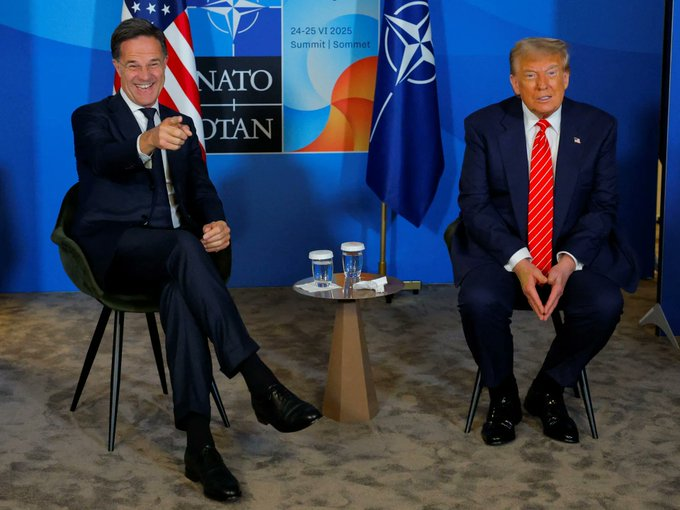
WASHINGTON — In a move that has sent shockwaves through European capitals, President Donald Trump is reportedly considering a fundamental restructuring of the North Atlantic Treaty Organization (NATO). According to a report from The Telegraph, the administration is proposing a “pay-to-play” model that would tie a nation’s voting power and security guarantees directly to its defense spending.
The proposal sets a staggering new benchmark: 5% of Gross Domestic Product (GDP).
The Proposed “Two-Tier” Alliance
Under the draft plan, NATO would shift from an “all-for-one” collective to a tiered system based on financial contribution:
- The 5% Threshold: This is a significant jump from the current 2% target (which many members still struggle to meet).
- Loss of “Decision Rights”: Countries that fall below the 5% mark would reportedly lose their seat at the table for “key decisions.” This includes a say in future military actions, strategic planning, and potentially the invocation of Article 5 (collective defense).
- “Protection as a Service”: Sources close to the administration suggest the President views NATO more as a “security insurance provider” than a traditional alliance, arguing that the U.S. should not carry the “lion’s share” of the cost for wealthy European nations.
Strategic Context: The 2026 Reality
The timing of this proposal coincides with the most intense period of global instability in decades:
- Operation Epic Fury: With the U.S. and Israel currently 29 days into a war with Iran, the Pentagon’s resources are heavily diverted to the Middle East. Trump has frequently complained that European allies are “not doing enough” while American taxpayers fund the bulk of the naval and air operations in the Gulf.
- The “Royal Navy” Precedent: The recent news that the UK’s Royal Navy had to rely on a German frigate (FGS Sachsen) to lead a NATO mission because its own destroyers were under repair has been used by the White House as “Exhibit A” for why allies need to spend more on their own readiness.
- The April 6 Deadline: As the U.S. nears its deadline to strike Iranian energy infrastructure, the President wants to ensure that NATO members who rely on that energy (like Germany and France) are “fully invested” in the regional security burden.
Who Meets the 5% Bar?
Currently, almost no NATO member—including the United States—reaches the 5% threshold.
| Country | 2024/25 Spending | Status Under New Rule |
| Poland | ~4.1% | Closest to the “Inner Circle” |
| United States | ~3.4% | Would need a massive budget hike |
| United Kingdom | ~2.3% | Tier 2 (Loss of voting rights) |
| Germany | ~2.1% | Tier 2 (Loss of voting rights) |
| France | ~2.1% | Tier 2 (Loss of voting rights) |
The European Reaction
The proposal has met with immediate pushback from Brussels and Paris.
- “Ending the Alliance”: Critics argue that stripping members of their “say” effectively ends NATO as a mutual defense pact and turns it into a mercenary arrangement.
- Economic Reality: European leaders point out that a 5% mandate would require cutting social services or education budgets during a time of high energy inflation caused by the Strait of Hormuz blockade.
The “pay-to-play” plan is expected to be a major point of tension during the upcoming NATO summit. Would you like me to look for more details on the 15-point ceasefire plan currently being discussed in Islamabad, or track the UK’s response to these proposed spending rules?
