
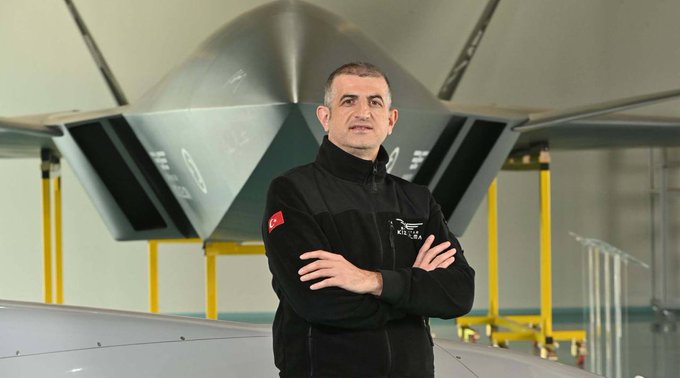
ISTANBUL / KYIV — The debate over the future of warfare has reached a boiling point as the world’s two most prominent defense CEOs offer clashing views on Ukraine’s military-industrial evolution. While Rheinmetall CEO Armin Papperger recently made headlines for dismissing Ukraine’s decentralized production as “housewives with 3D printers,” Haluk Bayraktar, the CEO of Baykar, has emerged as a staunch defender of the Ukrainian “innovation explosion.”
Speaking at the International Defense Industries Forum in Kyiv and recent tech summits, Bayraktar praised Ukraine for fundamentally rewriting the rules of modern engagement.
Bayraktar’s “Innovation Explosion” Argument
Unlike the “top-down” industrial model favored by traditional European contractors, Bayraktar argues that Ukraine’s strength lies in its agile, decentralized ecosystem:
- Beyond the “Housewife” Myth: Bayraktar highlighted that Ukraine’s drone companies have surged from a “few” to hundreds during the war. He described the current state as a “true boom” in technological innovation that world leaders are now rushing to study.
- The EW Evolution: He specifically cited the development of fiber-optic FPV drones—which are immune to the electronic warfare (EW) jamming that has neutralized many Western systems—and AI-enhanced targeting as proof of high-end engineering, not just “kitchen crafts.”
- Field-Driven Doctrine: “No one would have guessed before the war that FPVs would become the essential element of frontline protection,” Bayraktar noted. He credited Ukrainian innovators for being the “real heroes” who are saving their nation through rapid, iterative design.
A Clash of Defense Philosophies
The disagreement between Papperger and Bayraktar reflects a trillion-dollar divide in the global defense industry:
| Feature | The Papperger View (Legacy Industrial) | The Bayraktar View (Asymmetric Innovation) |
| Production | Centralized, multi-billion dollar mega-factories. | Decentralized, networked “startup” clusters. |
| Weaponry | Heavy Armor (Panther Tanks), High-cost AD. | Intelligent swarms, loitering munitions, FPVs. |
| Philosophy | War is won by massive industrial weight. | War is won by smart, low-cost, adaptive tech. |
| Drone Stance | A temporary “bubble” that will fade. | A permanent shift; “much like producing bullets.” |
The 2026 Reality: Scaling to Millions
Bayraktar’s assessment is backed by the latest production figures from Kyiv. Under the “Army of Drones” program, Ukraine is now:
- Scaling to Millions: Producing over 2 million drones annually across various classes.
- Fiber-Optic Dominance: Deploying new units like the “Ptashka”, which boasts a 50km range via fiber-optic cable, making it the most resilient strike platform on the 2026 battlefield.
- The “Interception” Market: Developing dedicated “interceptor drones” to hunt Russian Shaheds—a technology that Qatar just signed a major agreement to acquire from Ukraine today.
Baykar’s $100 Million “Act of Faith”
While Papperger mocked the “bureaucratic delays” in building factories, Bayraktar has doubled down, confirming that his $100 million investment in three Ukrainian projects—a plant, a service center, and a head office—is proceeding despite Russian strikes.
“The factory is the most concrete symbol of our faith in Ukraine’s future,” Bayraktar stated. “No missile can hurt our friendship.”
