
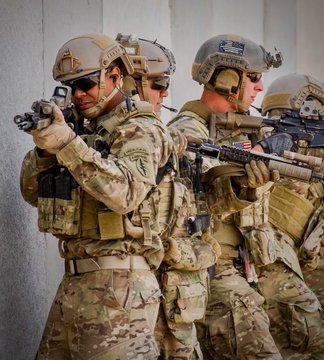
WASHINGTON / THE GULF — The Pentagon has developed advanced contingency plans for a targeted ground campaign in Iran that could last between several weeks and two months, according to a high-profile report from The Washington Post on Saturday, March 28, 2026. While President Donald Trump has not yet approved the deployment of boots on the ground, the planning represents a “dangerous new phase” of the month-old war, designed to give the Commander-in-Chief “maximum optionality” as the April 6 deadline approaches.
The report arrives as thousands of U.S. Marines and soldiers from the 82nd Airborne Division continue to arrive in the Middle East, bringing the total U.S. troop presence in the region to over 50,000.
The Strategy: “Limited Raids” vs. Full Invasion
U.S. officials emphasized that the current plans do not involve a 2003-style full-scale invasion or “regime change” via ground march to Tehran. Instead, the focus is on high-impact, asymmetric strikes:
- Target: Kharg Island: A primary objective is the potential seizure or blockade of Kharg Island, Iran’s main oil export hub. Controlling this facility would give the U.S. ultimate leverage over 90% of Iran’s remaining oil revenue.
- Coastal “Clearing” Operations: The plans include raids by a mix of Special Operations Forces (SOF) and conventional infantry to “clear out” Iranian missile sites and drone launch pads along the coast that are currently strangling the Strait of Hormuz.
- Securing Uranium: Some contingencies involve deep-interior “snatch-and-grab” missions to secure highly enriched uranium stockpiles from hardened nuclear facilities before they can be moved or weaponized.
A Timeline of “Weeks, Not Months”
While WaPo noted that one official estimated the operations could take “a couple of months,” the prevailing sentiment among planners is a shorter, sharper window.
- “Not a Prolonged Conflict”: Secretary of State Marco Rubio reiterated on Friday that the U.S. aims to achieve its goals without ground troops, insisting the operation is “ahead of schedule” and will not become a “forever war.”
- The Risks: Planners warned that even limited raids would expose U.S. personnel to “an array of threats,” including Iranian “missile cities,” IEDs, and the IRGC’s “suicide” maritime units.
- The “Bargaining Chip”: A former defense official told WaPo that seizing Iranian territory—even small coastal pockets—is intended to “embarrass the regime” and create tangible assets for the final negotiations in Islamabad.
Domestic and Regional Friction
The prospect of ground troops has triggered significant “America First” debate and regional alarm.
- The MAGA Split: Former National Counterterrorism chief Joe Kent recently resigned in protest, calling the war a result of “lobbying pressure” rather than national interest. Meanwhile, Tucker Carlson has publicly questioned if the ground plan repeats the “mistakes of Iraq.”
- Tehran’s “Coffin” Warning: In response to the reports, the Tehran Times ran a front-page headline: “WELCOME TO HELL,” warning that any U.S. soldier entering Iranian soil would “leave only in a coffin.”
- Public Opinion: Recent polling shows 62% of Americans oppose a ground invasion, though nearly 90% of the President’s core base continues to support the overall air campaign.
What’s Next?
The Pentagon’s plans remain “on the shelf” pending the outcome of the Islamabad Summit today. If the diplomatic channel fails to secure a full reopening of the Strait of Hormuz by April 6, the “Infrastructure Blitz” is expected to transition into these ground raids. The arrival of the USS Tripoli (carrying the 31st Marine Expeditionary Unit) in the Gulf today suggests the hardware for such an operation is now in place.
